
Terrarium
Terrarium
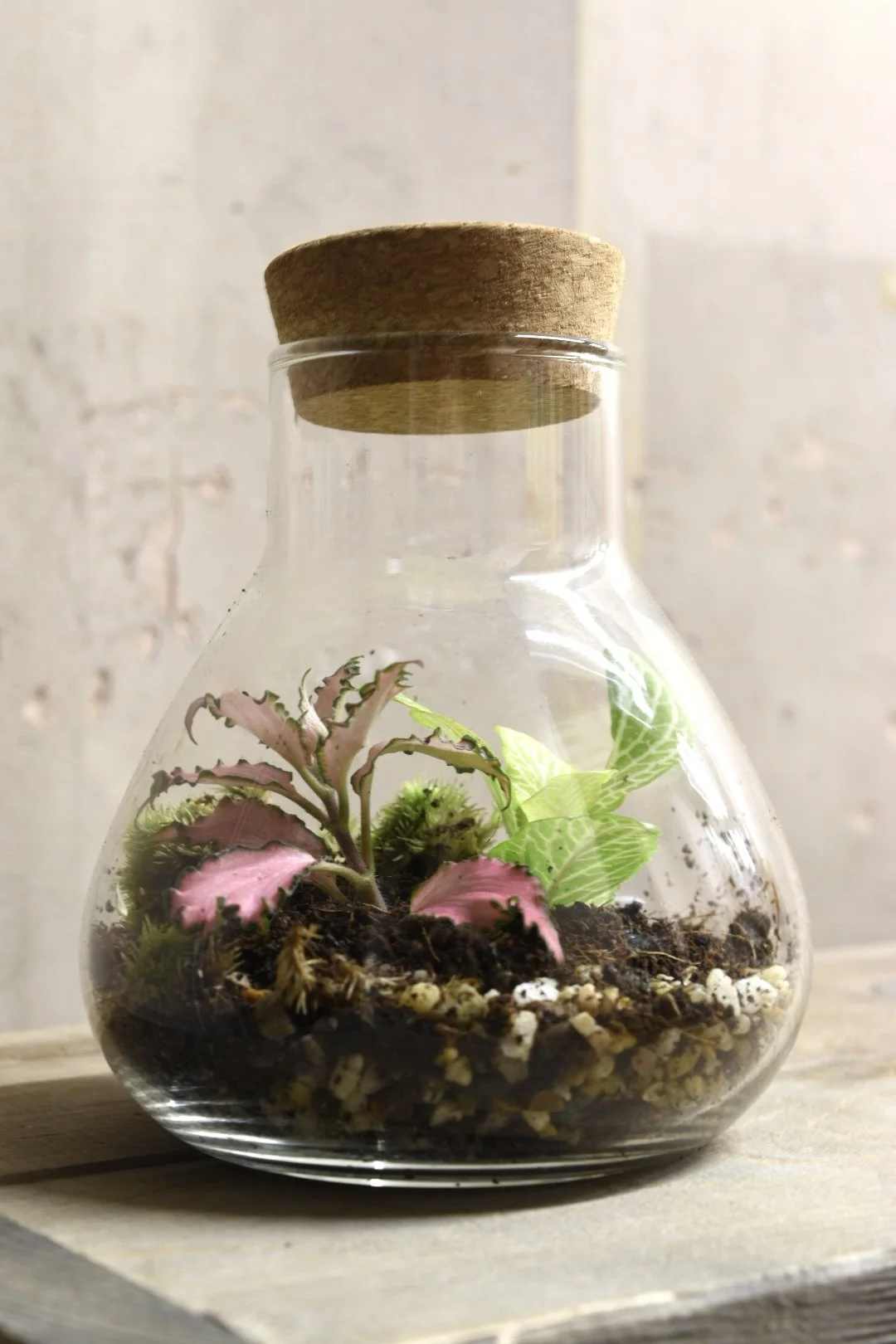
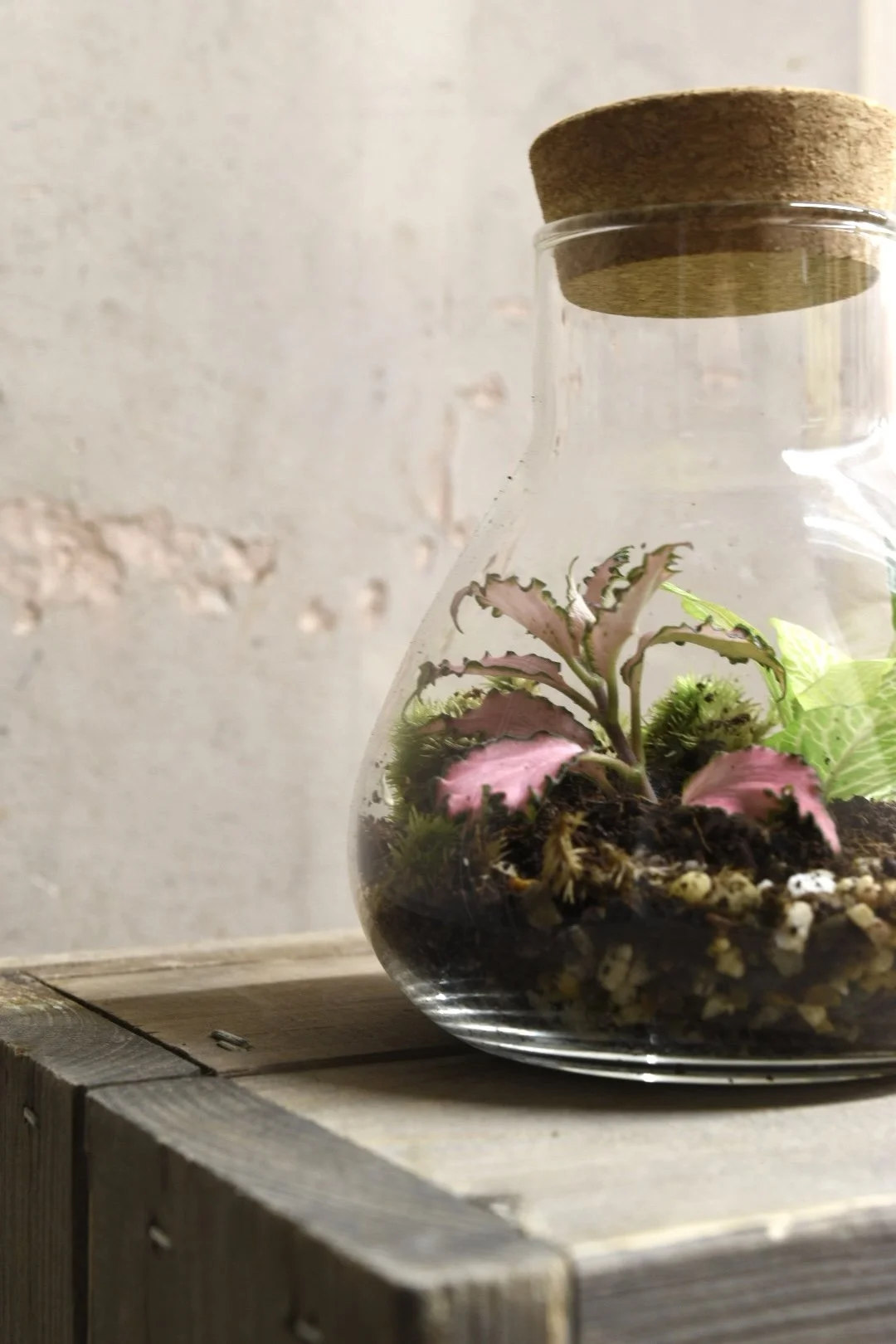
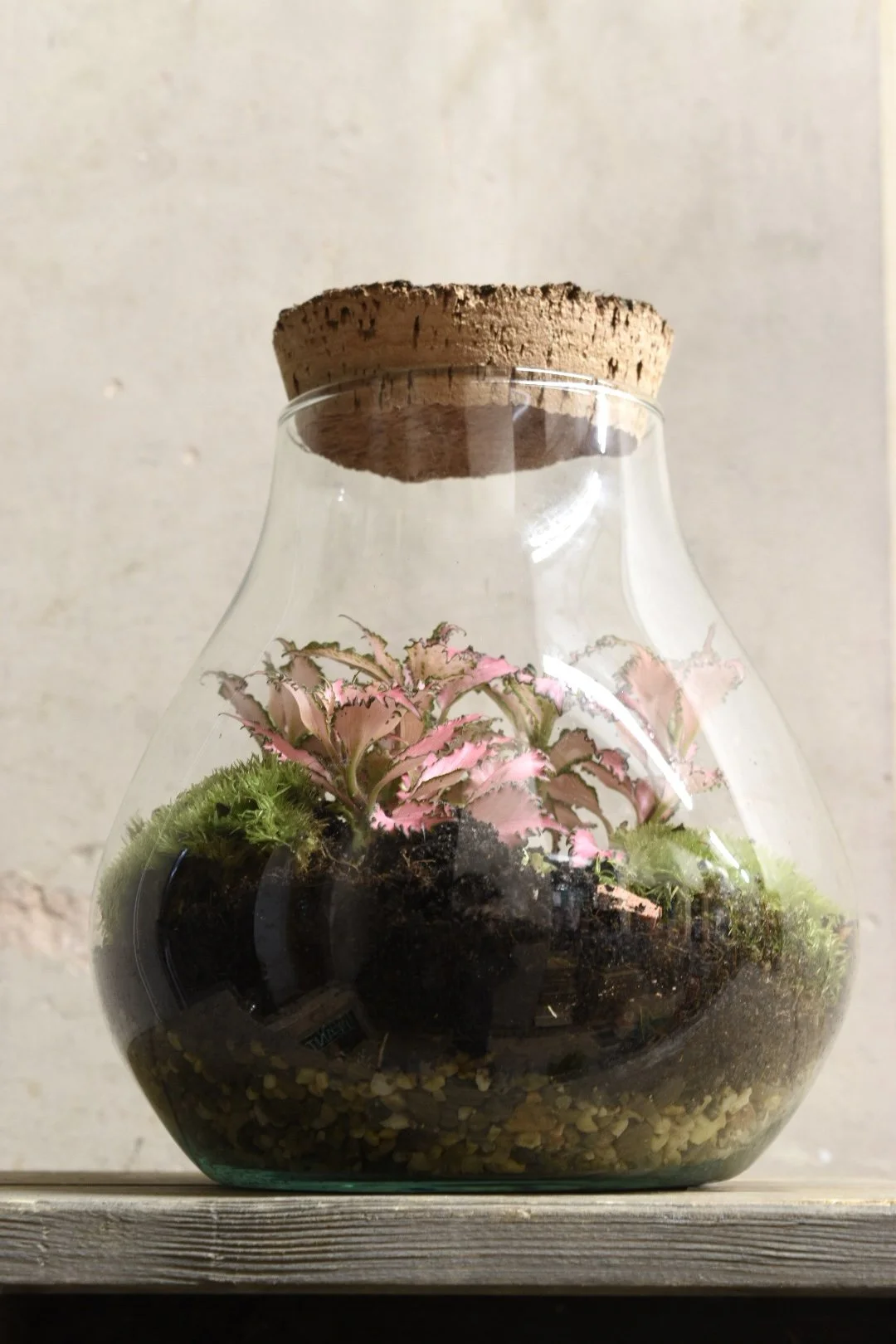
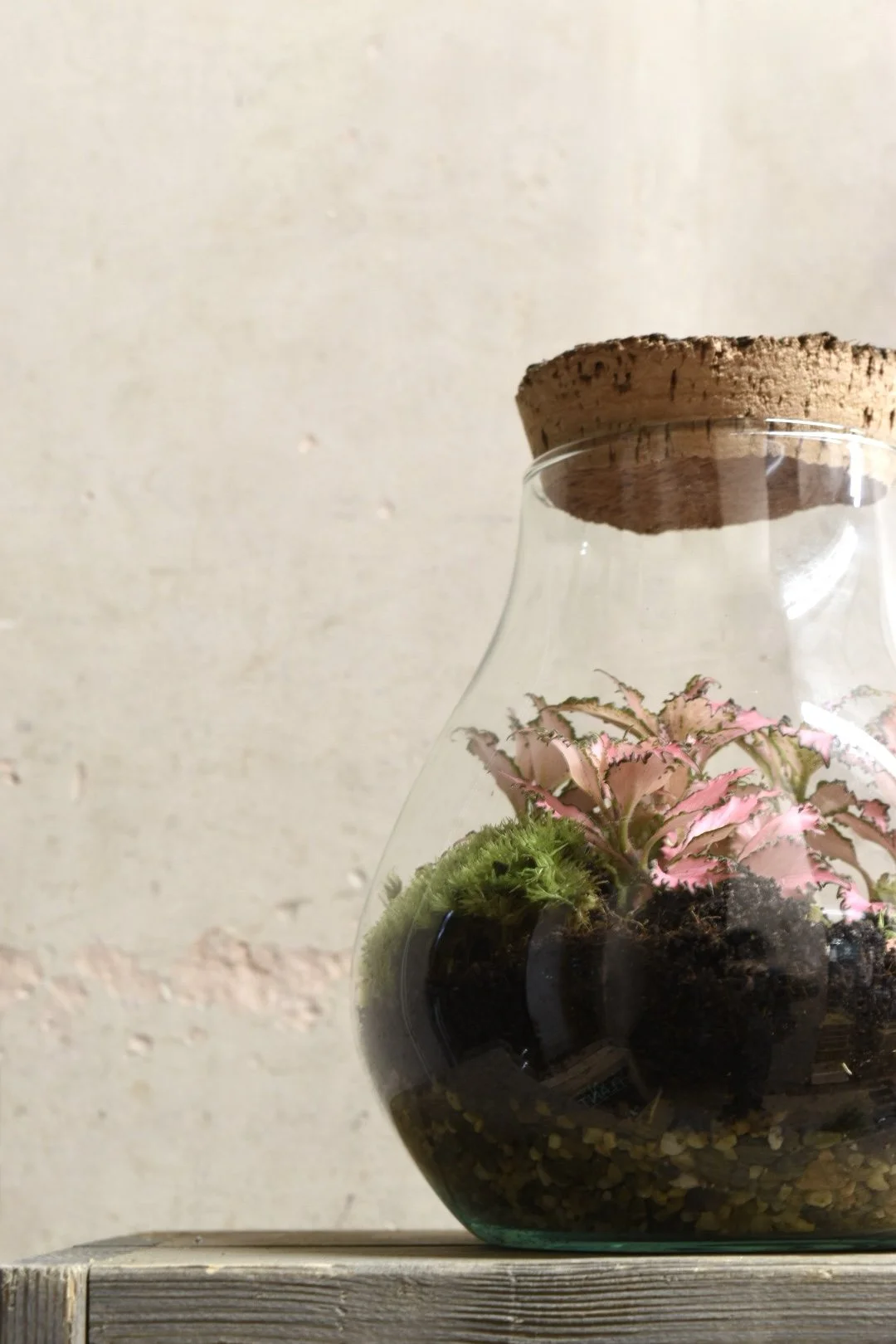
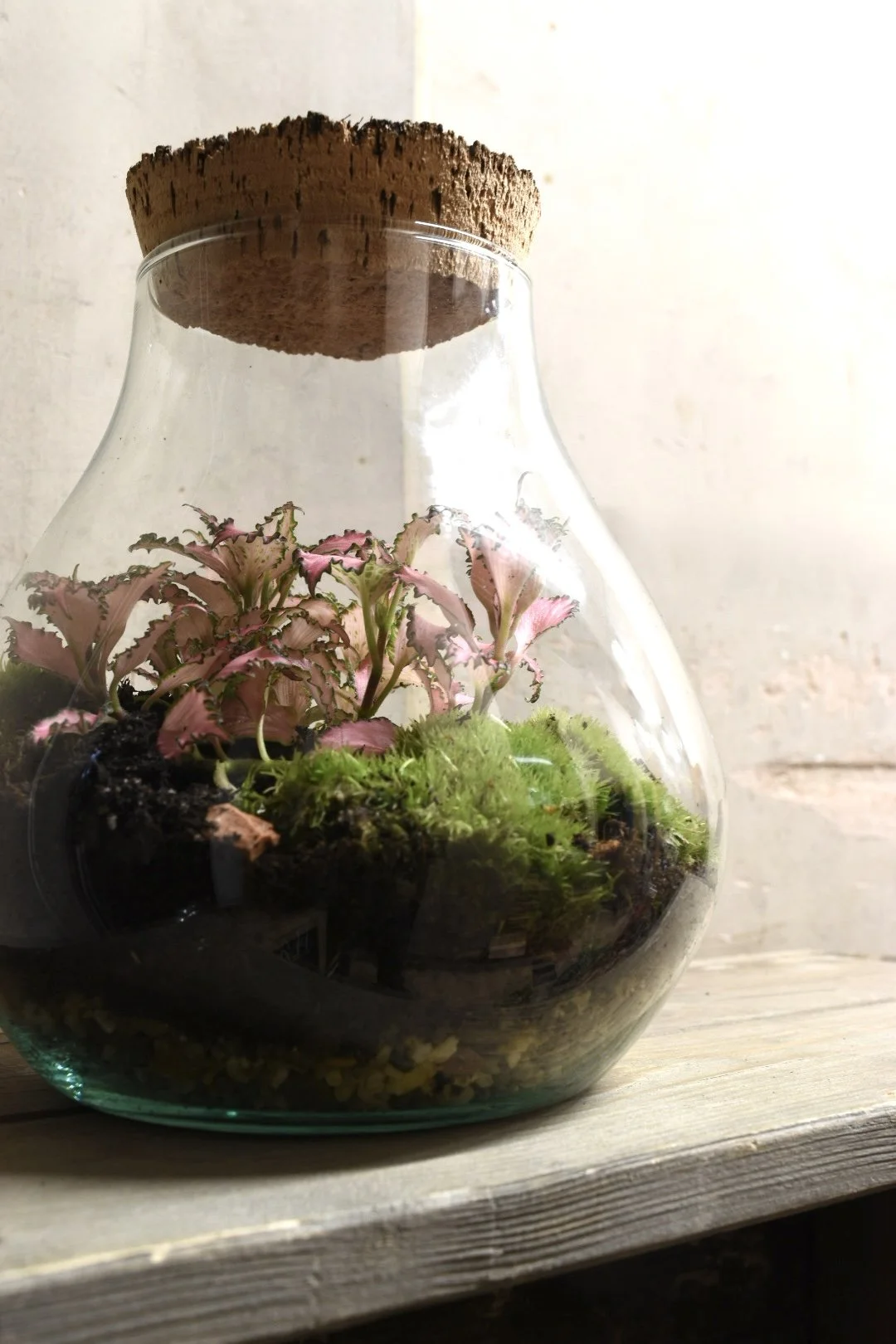
Terrarium Halley is a compact, self-contained glass terrarium featuring a layered substrate, live mosses, small ferns, and miniature accent plants arranged around a decorative central rock. Designed for low maintenance, it creates a humid microclimate ideal for shade-loving species and thrives in bright, indirect light. Perfect for desks or shelves, Terrarium Halley brings a tidy, natural focal point to small spaces and requires occasional misting and minimal pruning to stay lush.
Light
Place in bright, indirect light. Avoid direct midday sun — glass magnifies heat and can scorch plants or overheat the terrarium.
East- or north-facing windows are ideal; filtered south- or west-facing light is acceptable if indirect or diffused.
Watering & Humidity
Closed terrarium: water sparingly. After initial setup, water only when condensation disappears or plants begin to wilt.
Check monthly: if there’s heavy dripping or constant fogging, reduce water; if glass is dry and plants look limp, add a small amount.
Open terrarium: mist lightly 1–2 times per week, depending on room humidity.
Use room-temperature, low-mineral water (filtered or rainwater preferred) to avoid mineral buildup on glass.
Soil & Drainage
Ensure proper layering: drainage layer (gravel, small pebbles), charcoal for odor and filtration, a barrier mesh (optional), then a well-draining, peat-free potting mix suited to terrarium plants.
No standing water at the bottom; closed terraria rely on internal moisture cycling.
Temperature
Keep between 60–75°F (16–24°C). Avoid cold drafts, radiators, and sudden temperature swings.
Pruning & Grooming
Trim back overgrowth to prevent overcrowding and to maintain airflow.
Remove yellowing or rotting leaves immediately to prevent fungal issues.
Clean the inside of the glass gently with a soft cloth when necessary; avoid strong cleaners.
Ventilation
Occasionally open the lid (for closed terraria) for 1–2 hours every 1–2 weeks to exchange air and reduce mold risk—more often if you notice excess moisture or mildew.
Pests & Disease
Monitor for fungus gnats, scale, and mealybugs. Treat early: remove affected material, increase ventilation, and use insecticidal soap if needed.
Mold: reduce watering, improve ventilation, remove affected material.
Fertilizing
Minimal feeding required. If desired, dilute a balanced, water-soluble fertilizer to 1/4 strength and apply once or twice a year during the growing season.
Plant Selection & Replacement
Use slow-growing, humidity-loving plants (small ferns, fittonia, mosses, baby tears, peperomia pygmaea). Replace plants that outgrow the space.
Avoid large-rooting or fast-growing species that will quickly overcrowd the terrarium.
Troubleshooting — Quick Tips
Excess condensation: open lid more often, reduce watering, move to slightly cooler or less humid spot.
No condensation and wilting: add a small amount of water, cover for 24–48 hours, then monitor.
Algae or clouded glass: reduce light intensity and frequency, clean glass, remove algae-affected material.