
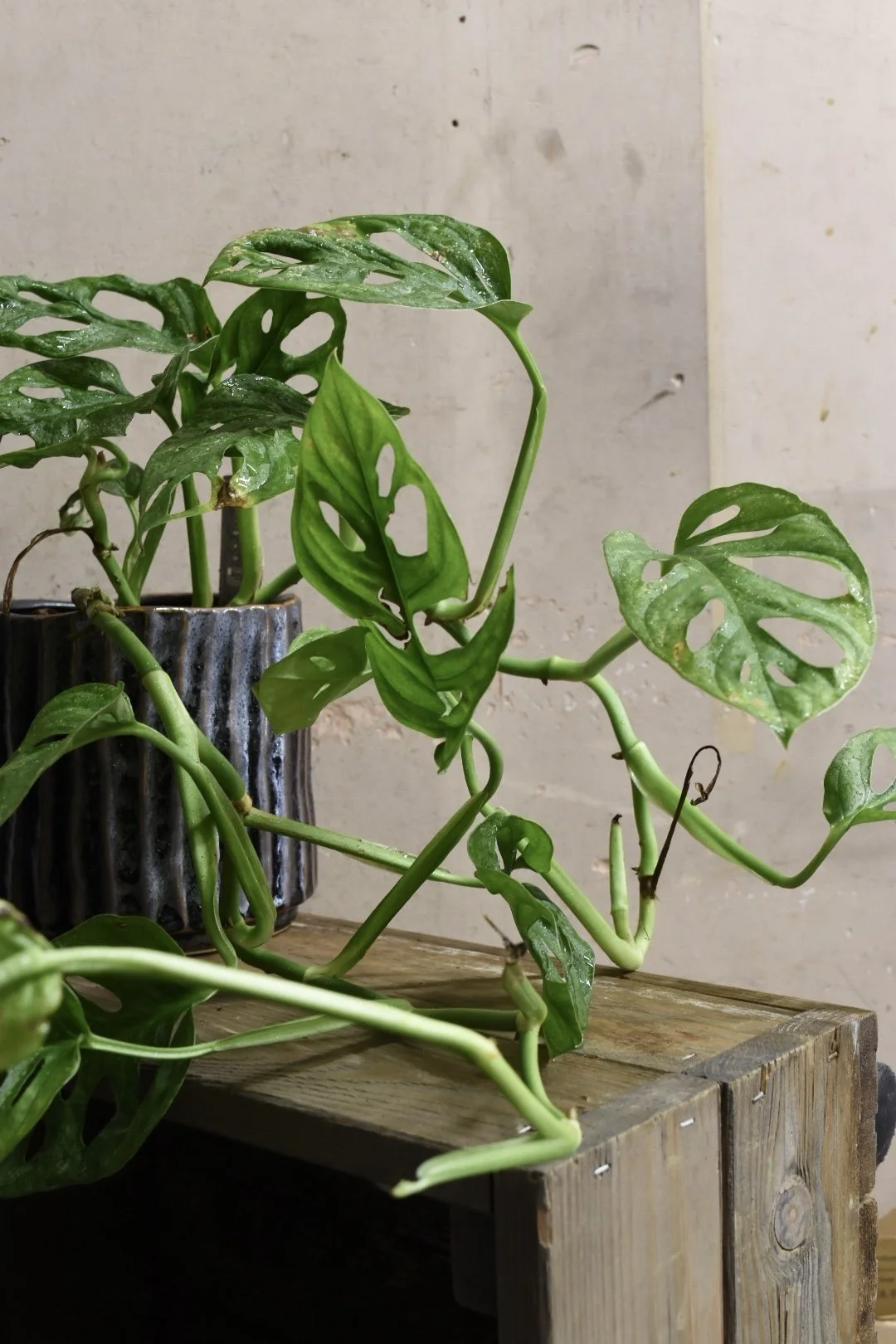
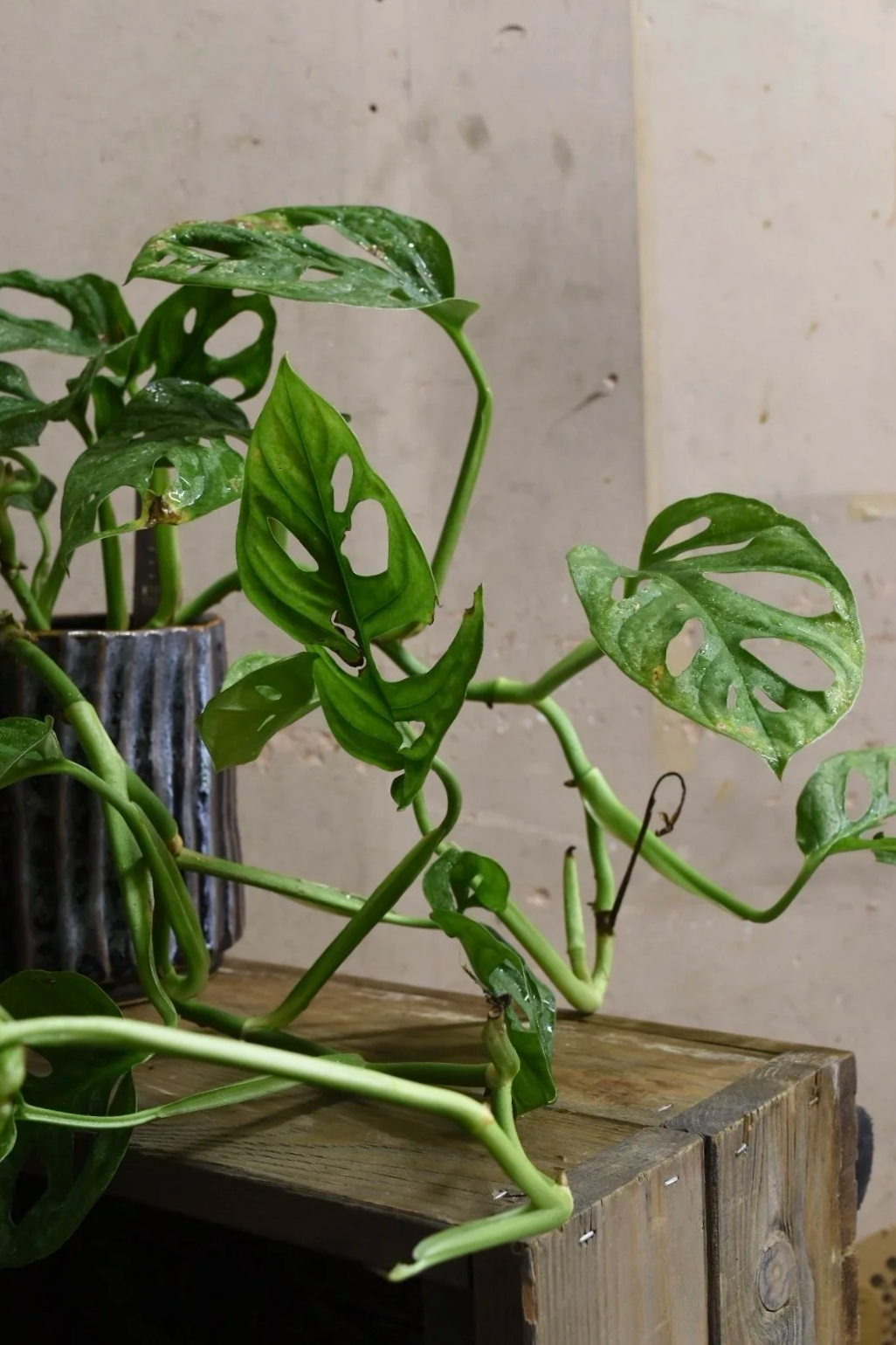
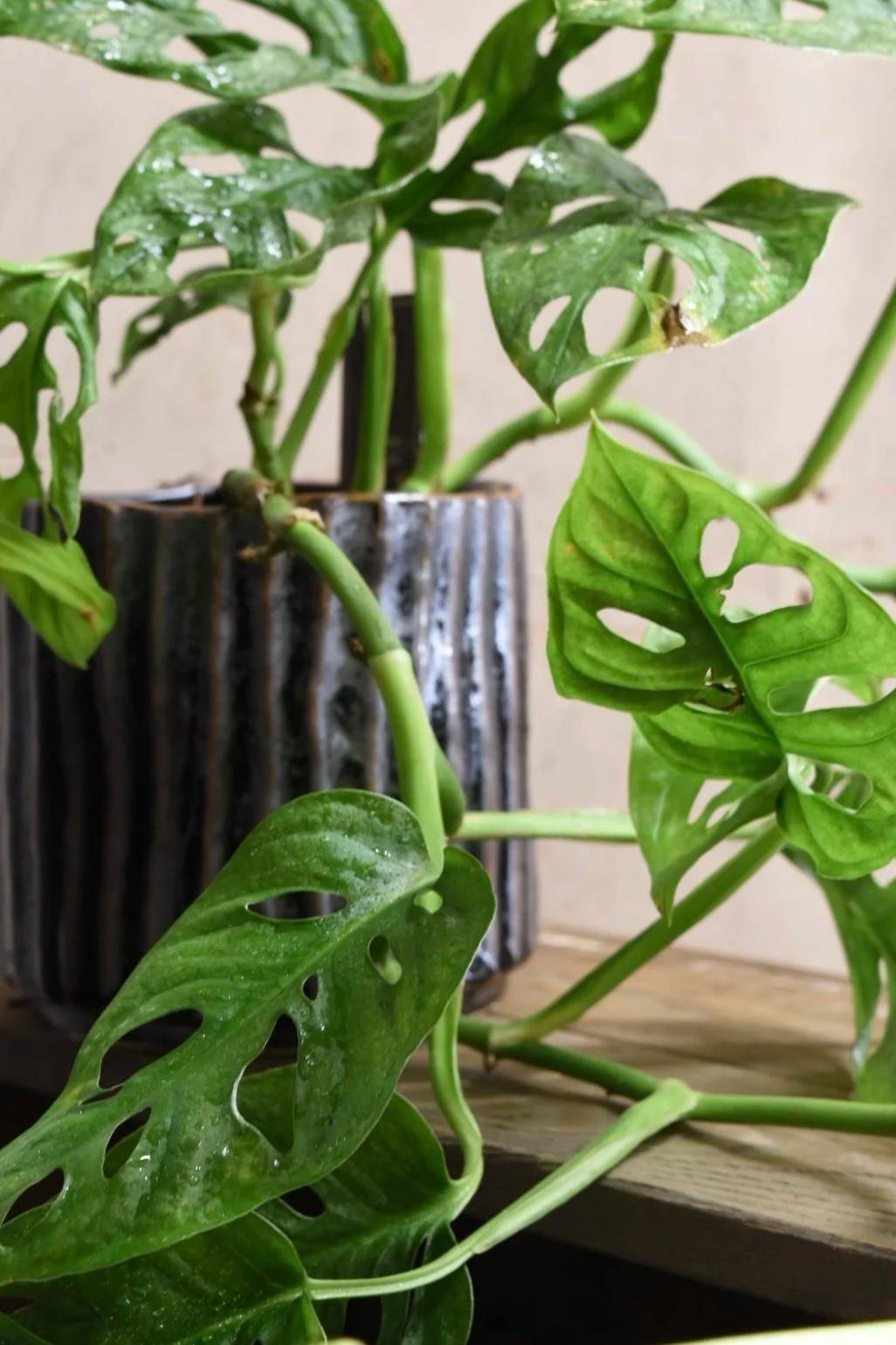
Monstera Obliqua (Monkey Mask) 30cm
Monstera Obliqua (Monkey Mask) 30cm
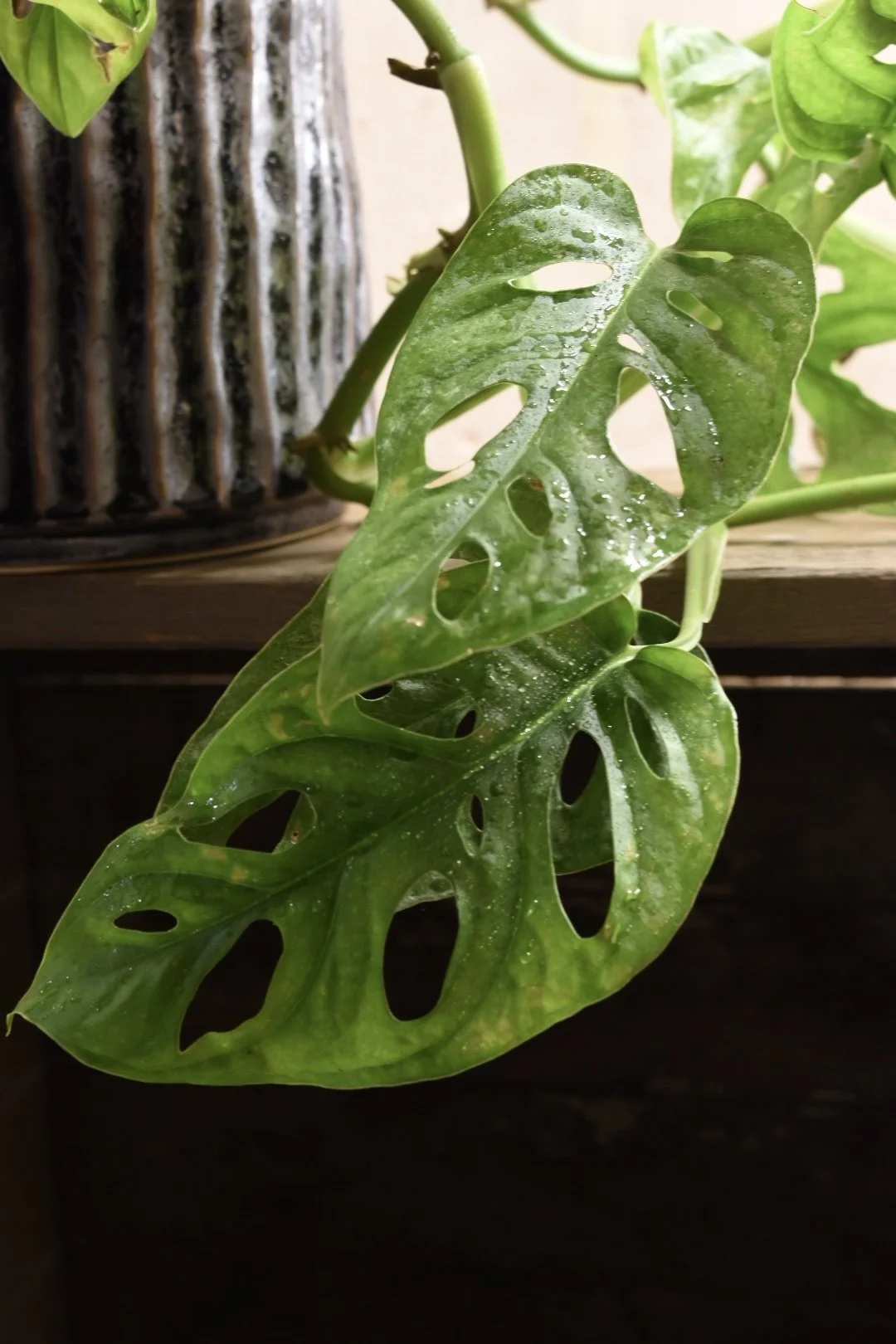
Monstera obliqua, often called Monkey Mask, is a delicate aroid prized for its extremely perforated, lace-like leaves.
Light
Bright, indirect light is best. Avoid direct sun, which can scorch the thin leaves.
Too little light slows growth and reduces leaf development; too much light causes bleaching or brown edges.
East- or north-facing windows or a few feet back from a south- or west-facing window work well. Diffuse light with sheer curtains if necessary.
Temperature
Keep between 65–80°F (18–27°C).
Avoid temperatures below 55°F (13°C).
Protect from cold drafts and sudden temperature swings.
Humidity
High humidity (60–85%) is ideal. The thin foliage is highly susceptible to low-humidity damage.
Use a humidifier, pebble tray with water, or consistently group plants to raise local humidity.
Bathrooms and kitchens can work if they have sufficient light.
Watering
Water when the top 1–2 inches (2.5–5 cm) of the potting mix are dry. Frequency depends on potting mix, pot size, humidity and temperature.
Use room-temperature, filtered or rainwater if your tap water is hard or high in chlorine. Chlorinated or saline water can cause leaf tips to brown.
Avoid overwatering and waterlogged soil — Monstera obliqua is prone to root rot. Ensure good drainage and never leave the plant sitting in standing water.
Soil and potting mix
Use a well-draining, airy aroid mix: a blend of high-quality potting soil, orchid bark, perlite, and a bit of coco coir or peat for moisture retention.
Aim for a mix that holds moisture but drains quickly to provide oxygen to the roots.
Use pots with drainage holes. Consider terracotta for better moisture regulation.
Fertilizing
Feed lightly during the active growing season (spring through early fall). Use a balanced, water-soluble fertilizer at 1/4 to 1/2 the recommended strength every 4–6 weeks.
Do not over-fertilize; because growth is generally slow, excess salts can build up and damage roots and foliage.
Flush the potting mix with clear water every few months to remove accumulated salts.
Support and growth habit
Monstera obliqua is a vining climber. Provide a moss pole, trellis, or stakes to support vertical growth — climbing encourages larger, healthier leaves and more fenestrations.
When grown trailing, leaves tend to be smaller; climbing supports better leaf development.