
Terrarium Plant Arrangement Dome
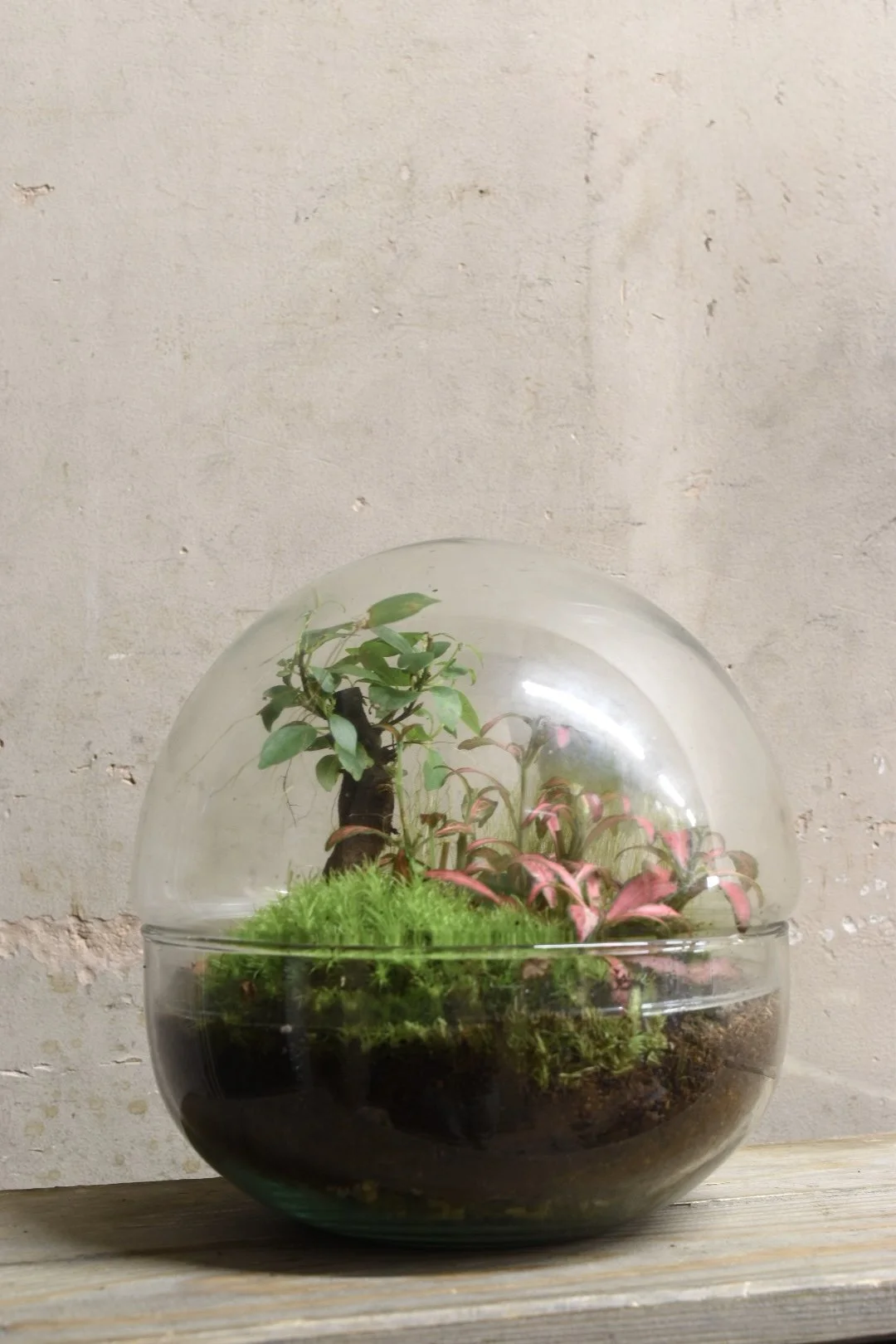
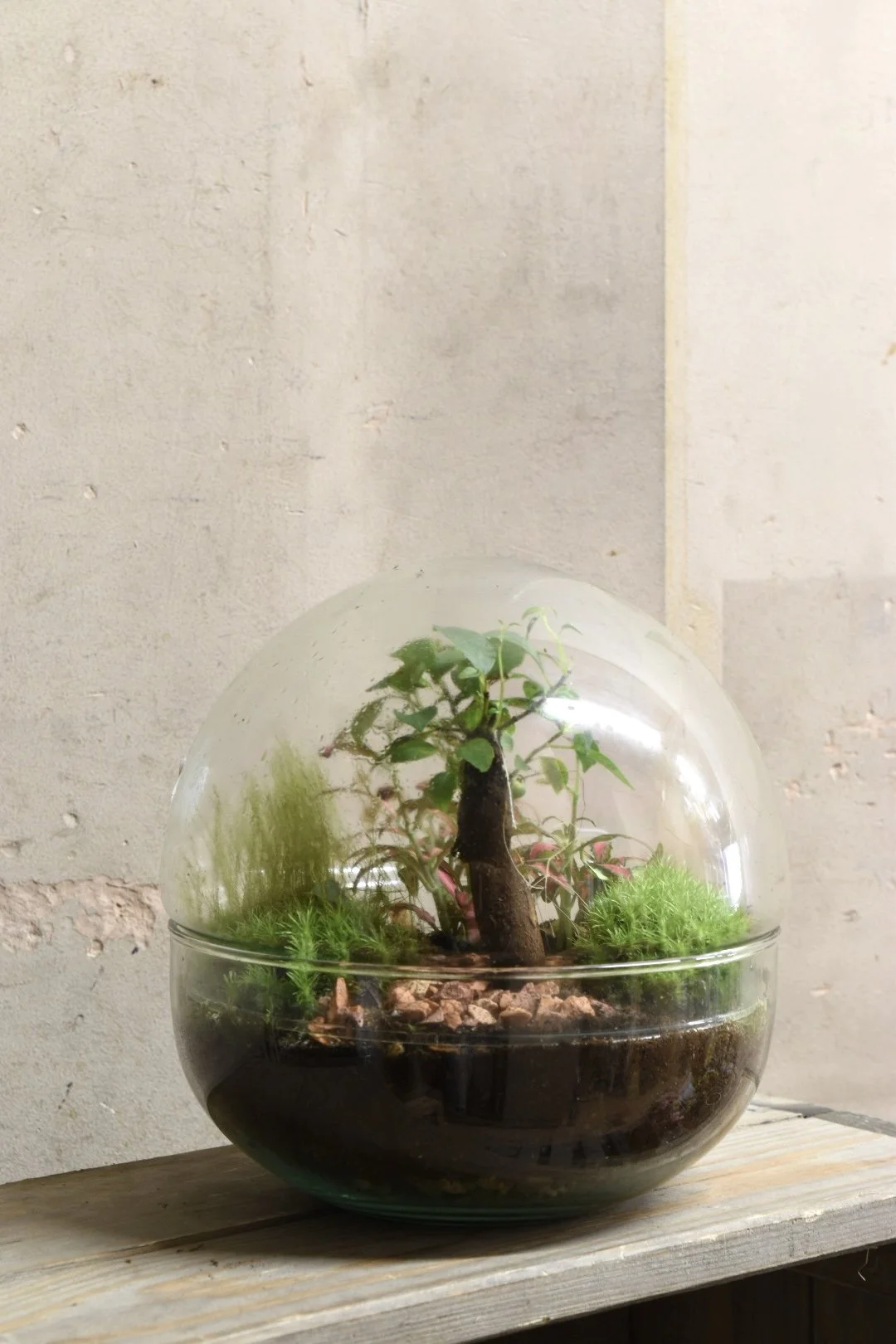
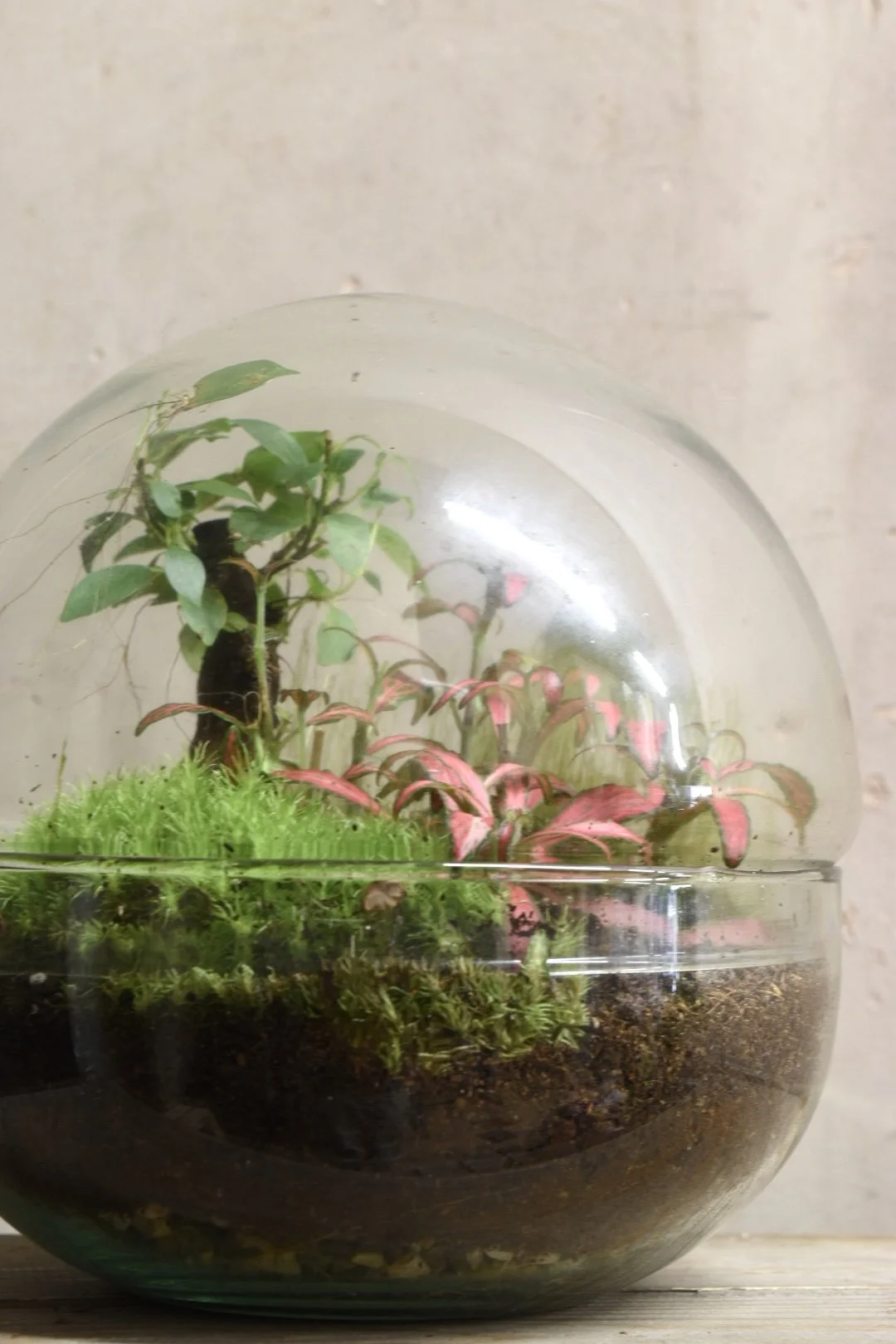
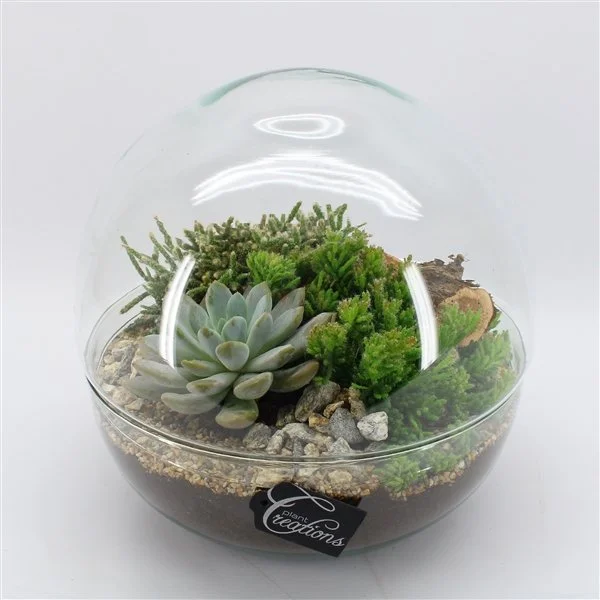
Terrarium Plant Arrangement Dome
A Terrarium Plant Arrangement Dome is a self-contained, glass-enclosed miniature ecosystem featuring small-scale plants, decorative substrate, and sometimes mosses, stones, or figurines. Housed under a clear dome or bell jar, these arrangements create high humidity and stable microclimates ideal for moisture-loving plants like ferns, fittonias, peperomias, and small tropicals. They require low to moderate light, minimal watering, and occasional ventilation to prevent mold. Terrarium domes are decorative, low-maintenance pieces that bring a lush, indoor garden aesthetic to desks, shelves, or tabletops.
Light
Bright, indirect light is best. Place near an east- or north-facing window or a few feet back from a south- or west-facing window. Avoid direct midday sun; glass magnifies heat and can scorch plants.
Temperature & Humidity
Keep between 60–75°F (15–24°C). Avoid cold drafts, heaters, and sudden temperature swings.
Domes retain humidity; open the lid briefly once a week for ventilation if you notice excessive condensation. For open-top domes, mist lightly when the air feels dry.
Watering
Water sparingly. Terrariums are a closed, humid environment and need much less water than potted plants.
Check soil moisture: use a finger or a wooden skewer — if the top 1 inch (2–3 cm) is dry, give a small amount of water. For closed domes, watering every 4–8 weeks is common; open domes may need water every 1–3 weeks depending on plant mix and room conditions.
Water at the soil level to avoid wetting leaves and causing rot. Stop watering if you see mold or persistent standing water — open the dome and let it dry before adjusting watering frequency.
Soil & Drainage
Use a well-draining, loose mix suitable for terrariums (peat-free potting mix or a mix with orchid bark/perlite for drainage).
Maintain a drainage layer: small stones or LECA at the bottom with a thin layer of activated charcoal to control odors and prevent bacterial growth. A screen or mesh between drainage and soil helps keep layers separate.
Plant Selection & Placement
Choose small, slow-growing, humidity-loving plants: fittonia, peperomia prostrata, baby tears (Soleirolia), fittonia, mini ferns, small mosses, and small trailing plants.
Group plants with similar light and moisture needs. Leave spacing for airflow and growth; trim to keep proportions.
Pruning & Maintenance
Remove dead or yellowing leaves promptly to prevent rot.
Trim leggy or overgrown stems to maintain shape and airflow.
Remove algae or mold from glass with a soft cloth; use gloves when handling plants.
Pests & Problems
Common pests: fungus gnats in overly wet soil, mealybugs, or scale. Isolate affected terrarium and treat with manual removal, rubbing alcohol on a cotton swab, or a gentle insecticidal soap.
Mold: reduce watering and increase ventilation. Remove moldy material and exposed soil surface.
Leaf scorch: move to lower light and reduce temperature/heat exposure.
Fertilizing
Fertilize sparingly — terrarium plants grow slowly and benefit from little to no regular feeding. If needed, use a diluted, balanced liquid fertilizer at 1/4 strength once or twice during the growing season.
Seasonal Notes
Growth will slow in cooler months; reduce watering accordingly.
Check more frequently in summer for signs of drying or overheating.
Quick Troubleshooting
Excess condensation: open dome and air out, reduce watering, move to slightly lower light.
No condensation & dry soil: increase ventilation but water lightly and check light (may be too bright and drying).
Yellow leaves: overwatering or poor drainage — reduce water, remove affected leaves, check layers.
Enjoyment Tips
Keep a small pair of scissors and a spray bottle nearby for quick maintenance.
Rotate dome occasionally for even light exposure and balanced growth.