
Coffea Arabica
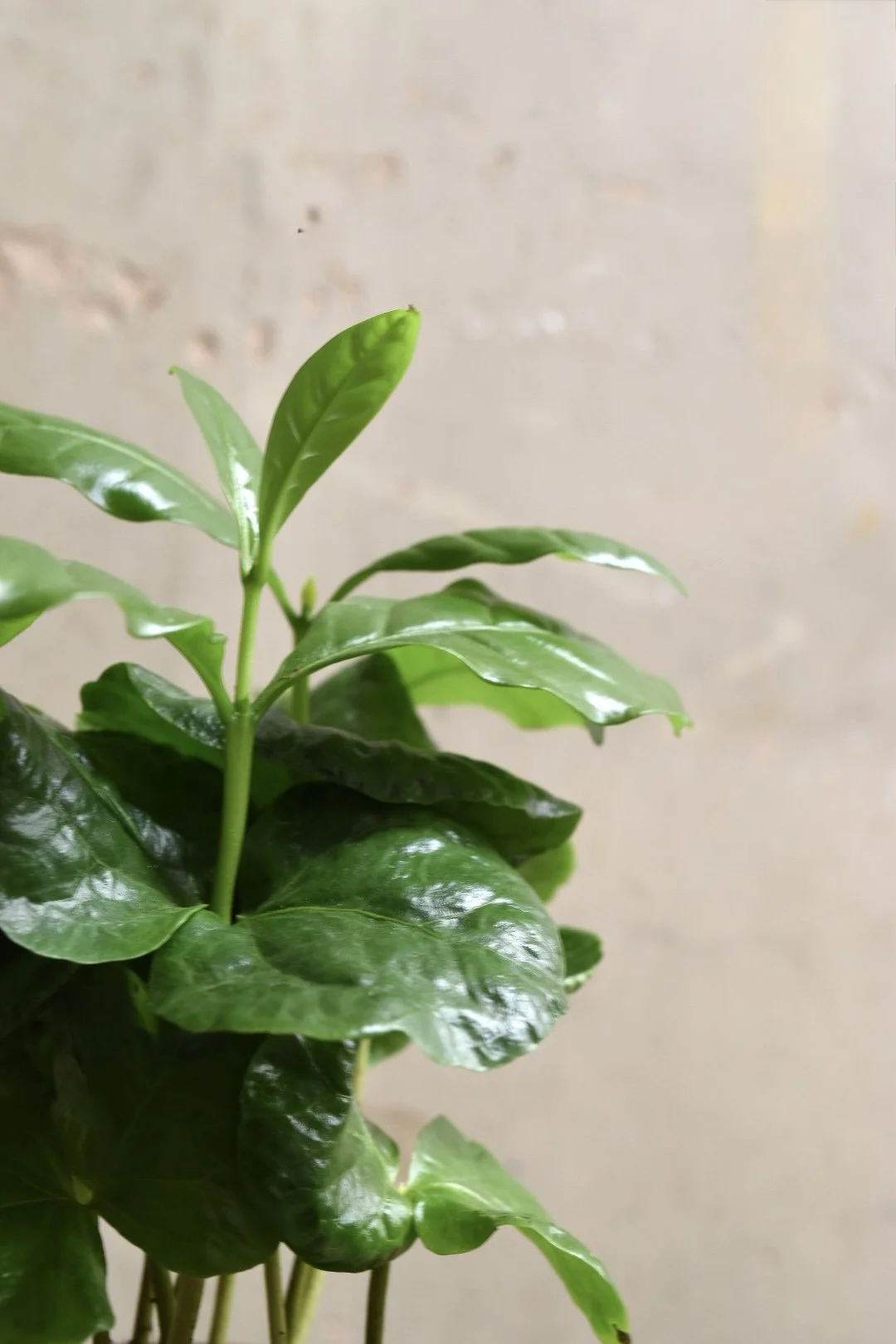
Coffea Arabica
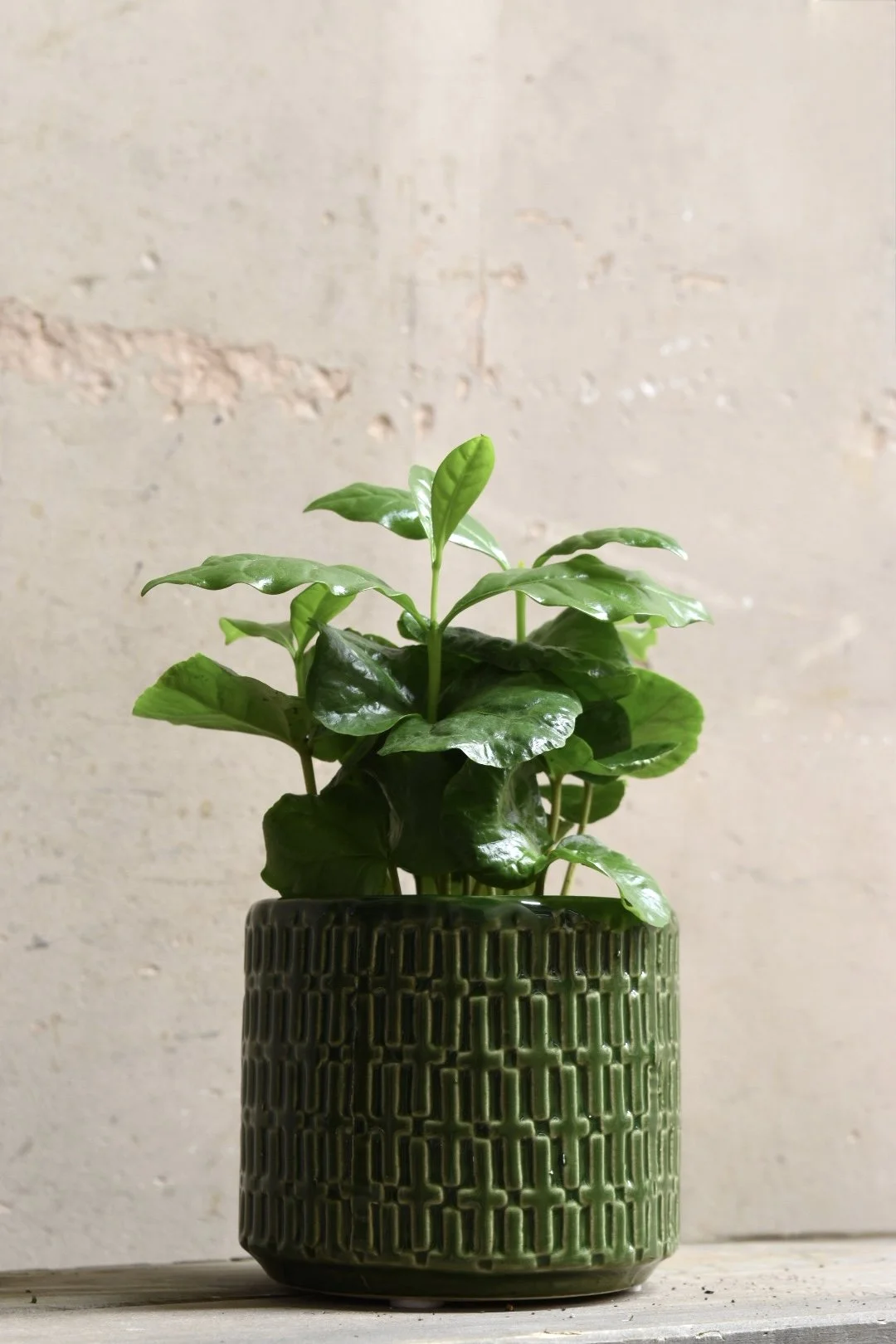
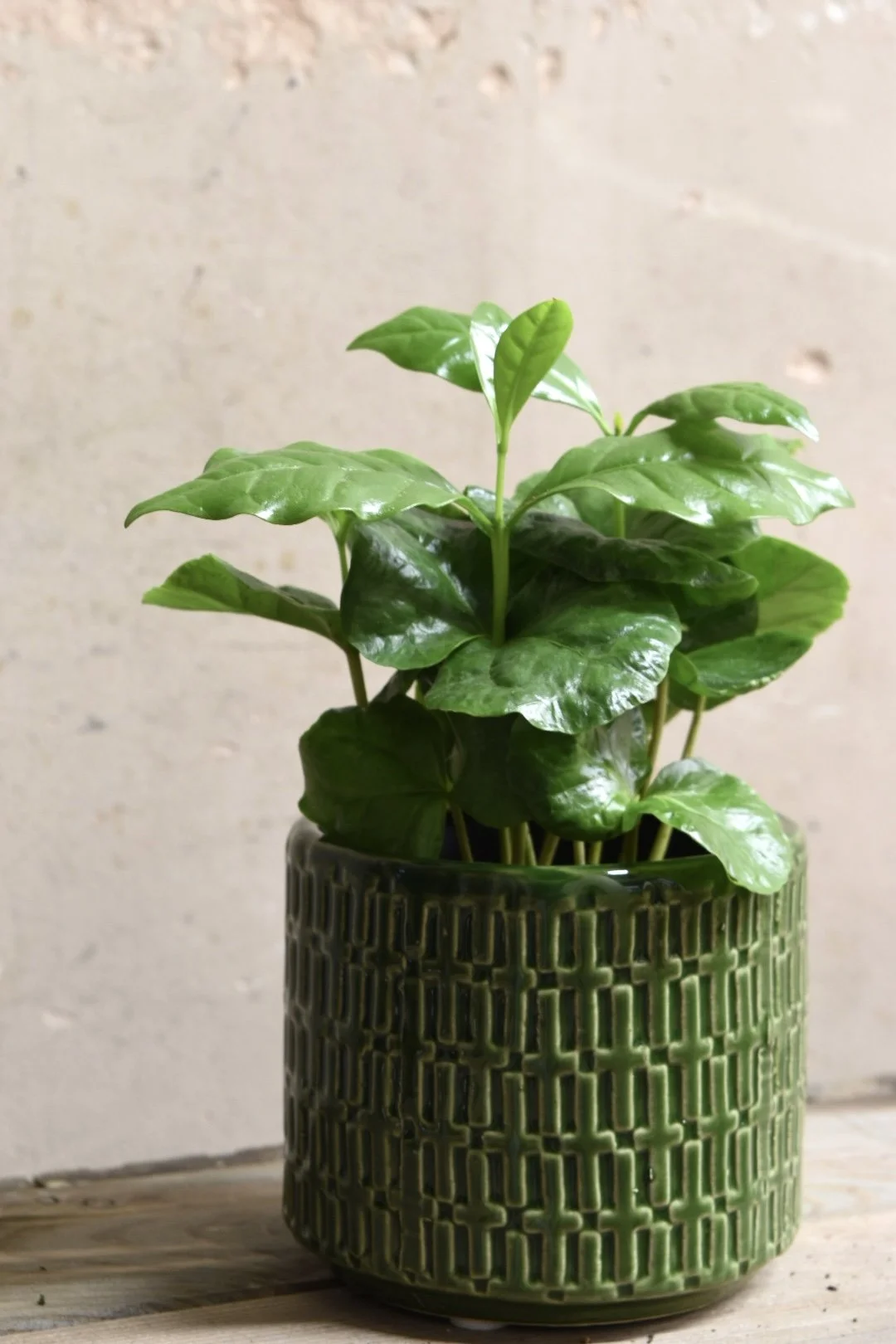
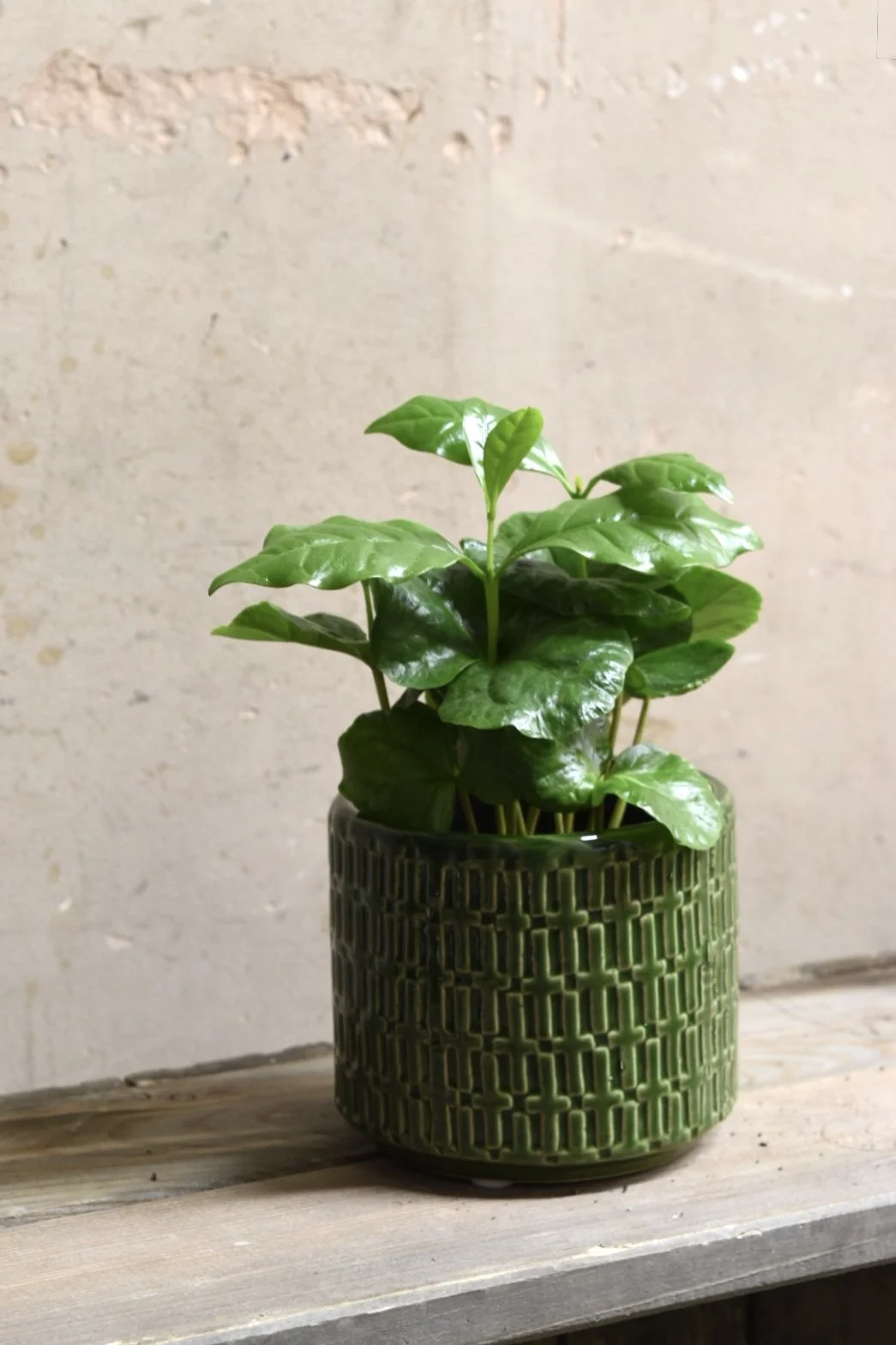
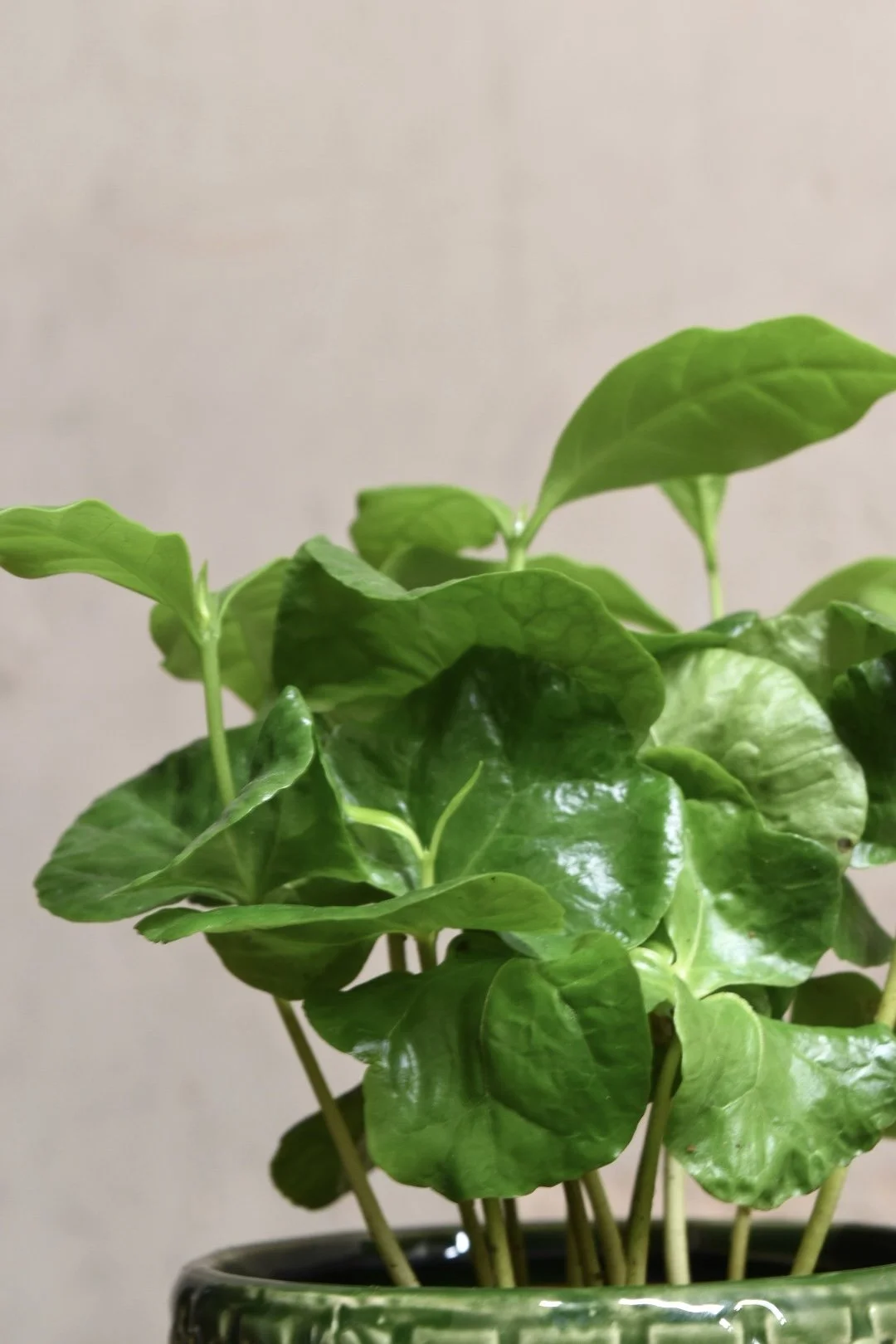
Coffea arabica is a perennial shrub native to the montane tropical regions of East Africa. As a houseplant in temperate climates it typically grows between 1 and 3 m in a pot, producing glossy, wavy leaves, fragrant small white flowers and, after flowering, red coffee cherries that contain the seeds (coffee beans).
Light
Bright, indirect light is best. Avoid direct midday sun, which can scorch leaves. A spot near an east- or north-facing window or filtered light behind sheer curtains works well.
Temperature & Humidity
Ideal temperature: 65–75°F (18–24°C). Keep above 55°F (13°C). Avoid cold drafts and sudden temperature swings. Prefers high humidity (50%+). Increase humidity with a pebble tray, regular misting, or a humidifier.
Watering
Keep the soil consistently moist but not waterlogged. Water when the top 1 inch (2.5 cm) of soil feels slightly dry. Use room-temperature, low-mineral water when possible.
Soil & Potting
Use a well-draining, peat-based potting mix amended with perlite or coarse sand.
Fertilizing
Feed with a balanced, water-soluble fertilizer (e.g., 10-10-10 or similar) every 4–6 weeks during the growing season (spring through early fall).
Pruning & Maintenance
Pinch growing tips to promote a compact form. If you want flowers/beans, allow some vertical growth and flowering branches to remain.
Flowering & Fruit
Arabica can produce fragrant white flowers and small red cherries if conditions are right (consistent light, humidity, stable temperature). Flowering is more likely in mature plants and with stable, favorable conditions over several months.