
Terrarium Plant Arrangement Glass Dome with Cork Lid
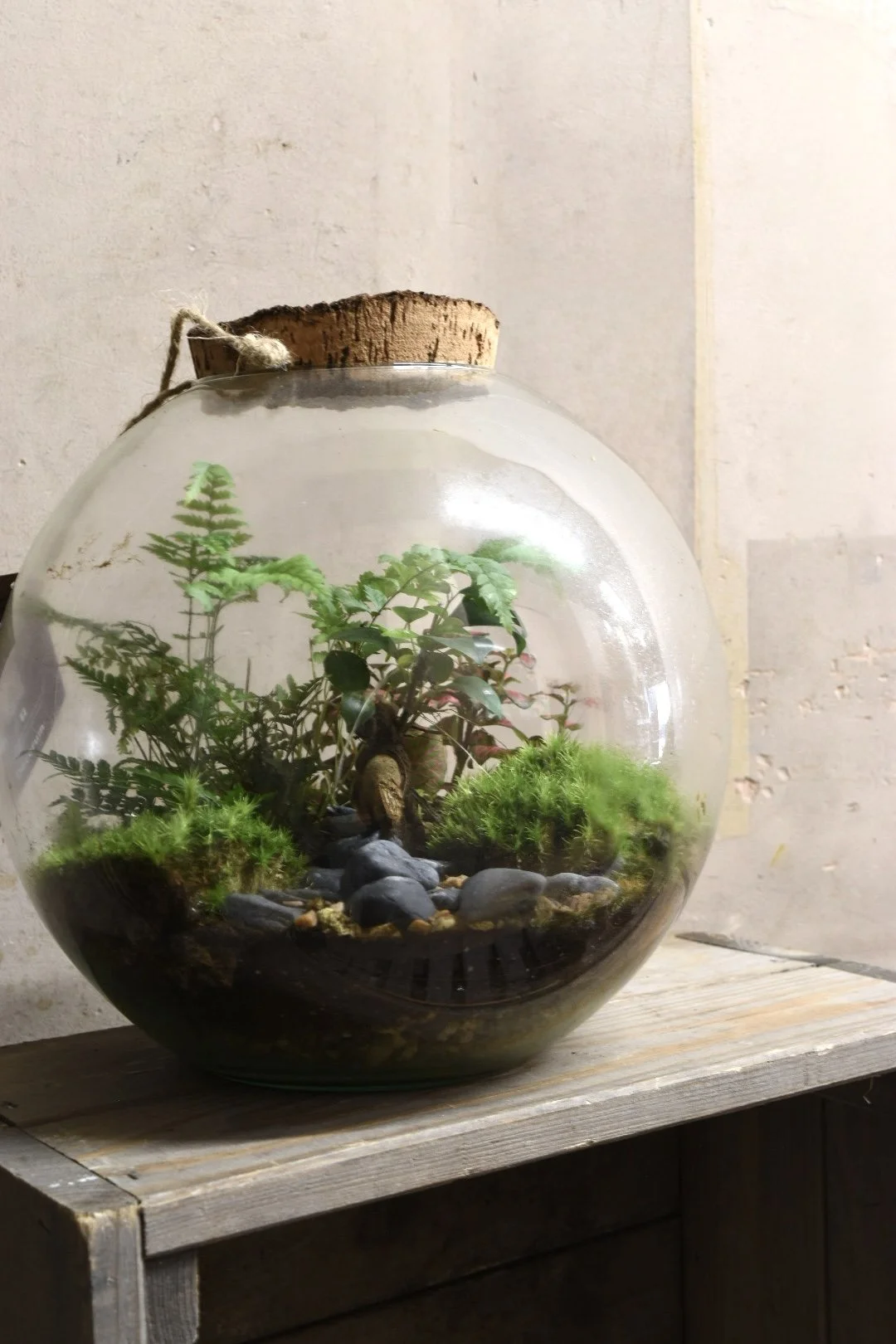
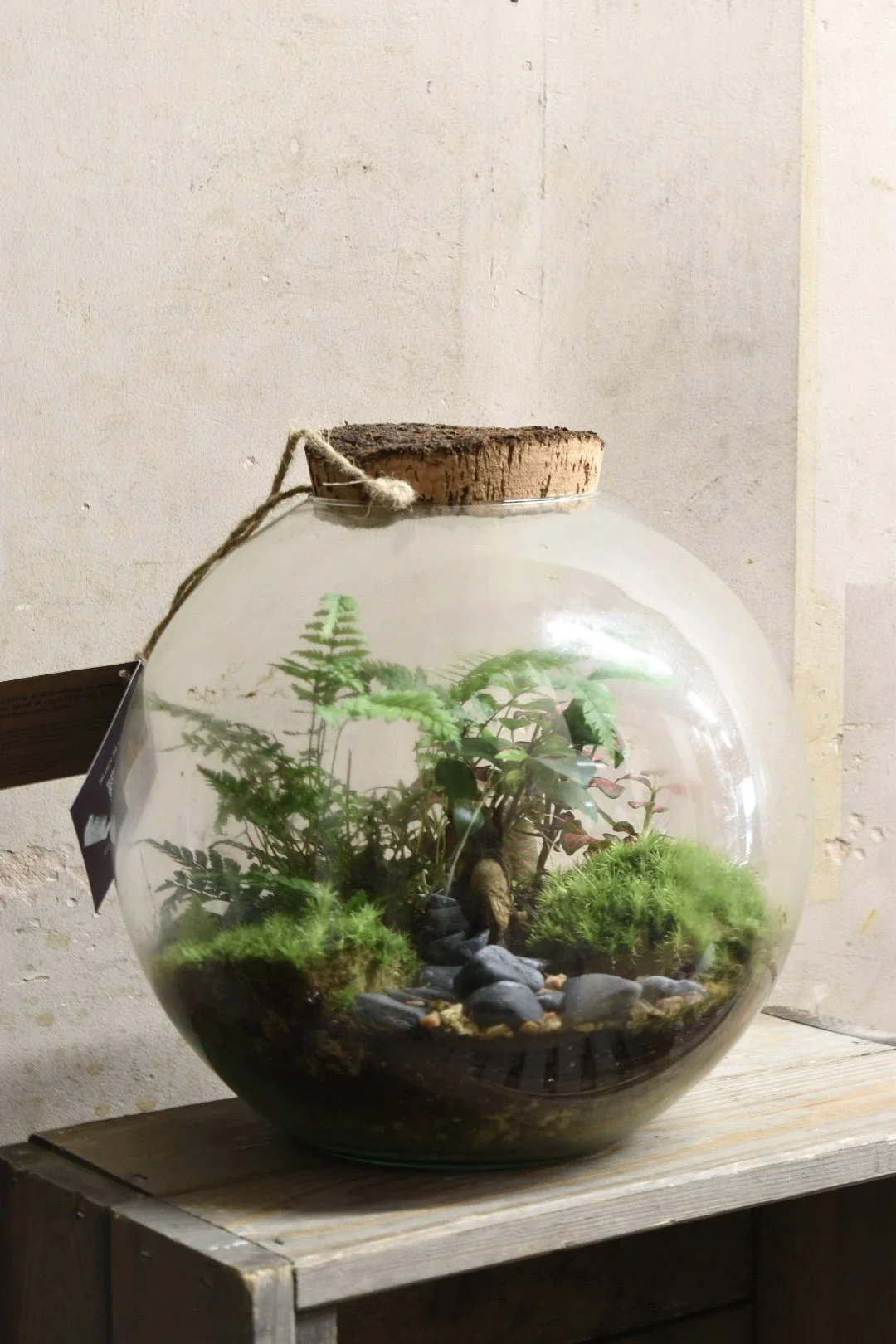
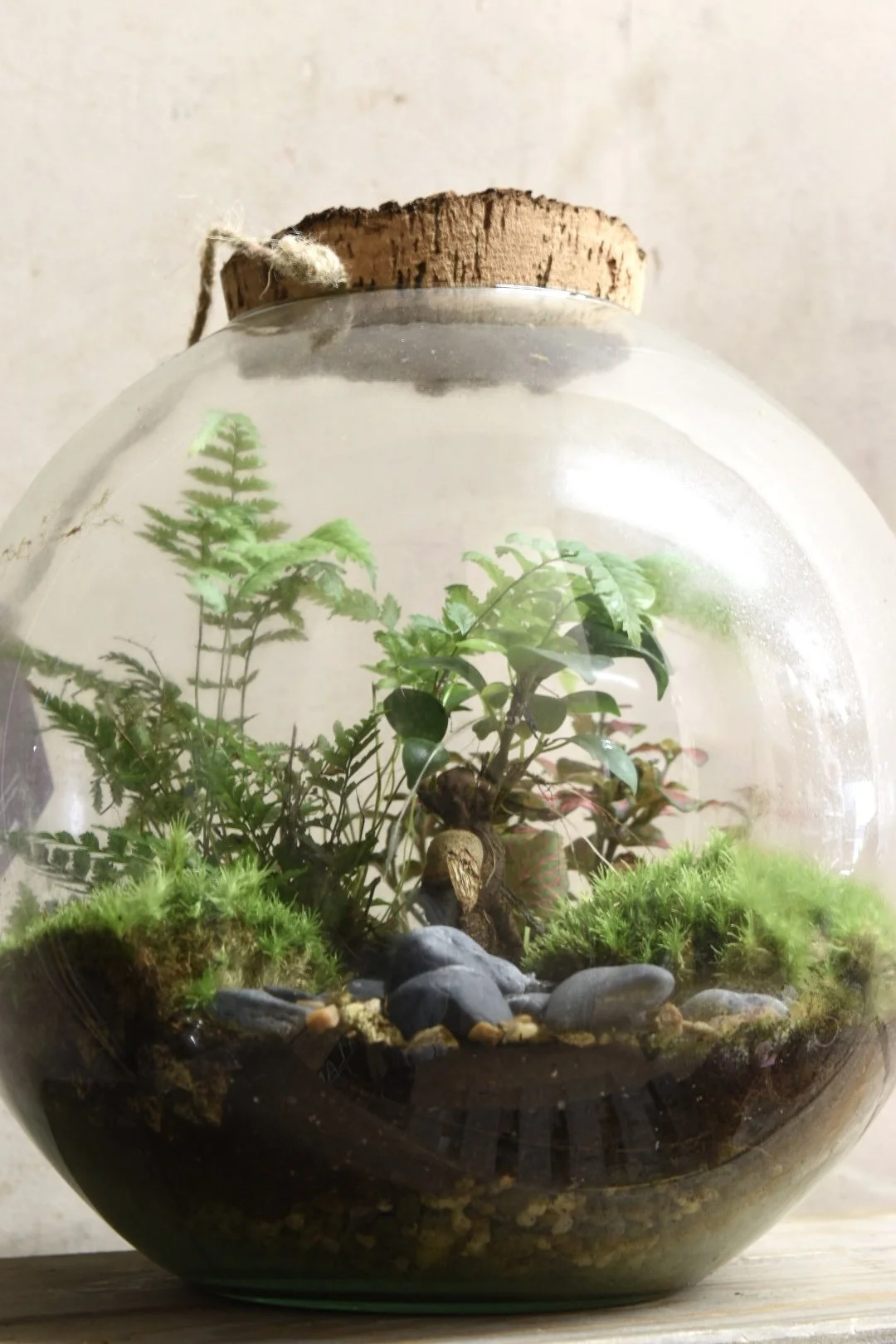
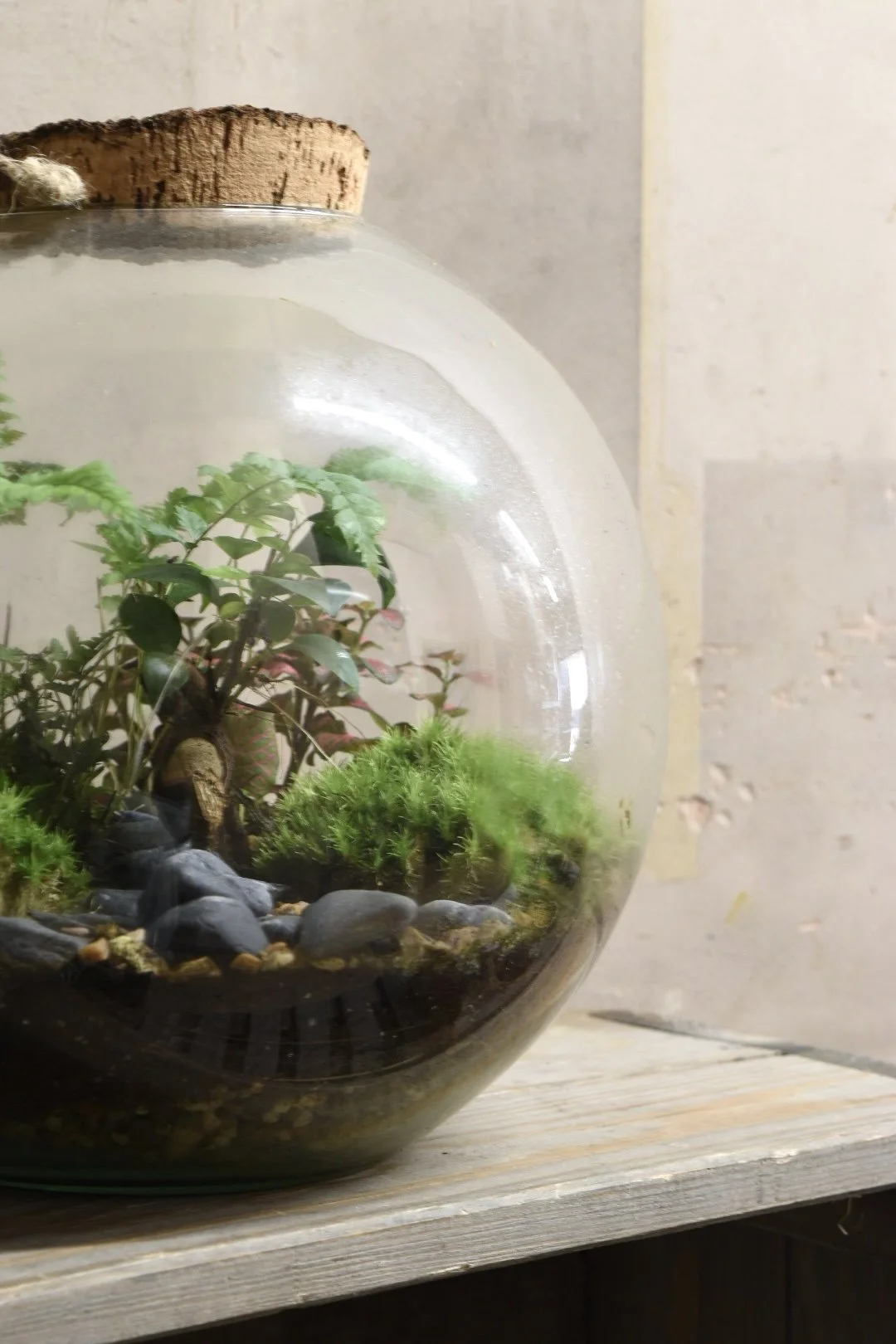
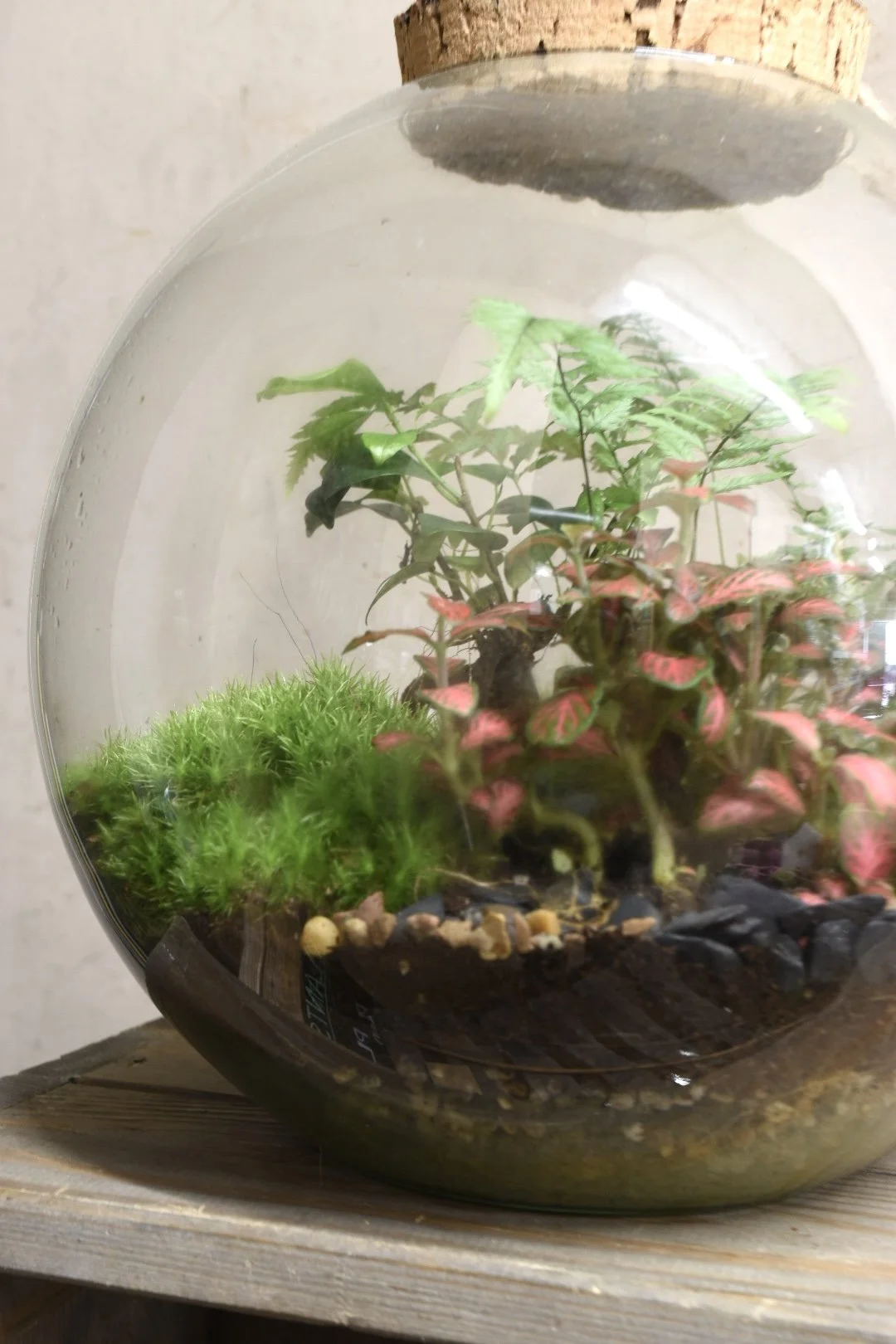
Terrarium Plant Arrangement Glass Dome with Cork Lid
This Terrarium Plant Arrangement in a Glass Dome with Cork Lid is a compact, self-contained miniature garden featuring carefully chosen small plants—such as mosses, succulents, or air plants—arranged on a layered substrate inside a clear glass globe. The cork lid creates a semi-closed environment that helps retain humidity and reduces watering frequency, while the transparent dome showcases the plants from every angle. Ideal for desks, shelves, and small spaces, this low-maintenance decorative piece brings a touch of greenery and calm with minimal care: bright, indirect light, occasional misting or light watering depending on plant type, and good airflow when the cork is briefly removed.
Light
Bright, indirect light is best. Place near a north- or east-facing window or a few feet back from a south- or west-facing window.
Avoid direct midday sun; glass can magnify heat and scorch plants.
Temperature & Humidity
Keep between 60–75°F (15–24°C). Avoid cold drafts and heat sources (radiators, vents).
The closed cork lid keeps humidity high—ideal for tropical, moisture-loving plants. Remove the lid occasionally (see Ventilation) if condensation is constant.
Watering
Water sparingly. Closed terrariums recycle moisture; overwatering causes rot and mold.
Check soil moisture with your finger or a wooden skewer: water only when the top 1 inch (2–3 cm) of soil is dry.
Use a small watering can or syringe to add water directly to the soil, avoiding splash on leaves. Typical frequency: every 4–8 weeks, depending on light and season.
Ventilation
Open the cork lid for 10–30 minutes once a week to exchange air and prevent mold.
If heavy condensation builds up on the glass, leave the lid off longer or open daily until humidity stabilizes.
For permanently high humidity plants (mosses, ferns), reduce airing to avoid drying them out.
Soil & Drainage
Use a well-draining terrarium mix: a base layer of small pebbles or activated charcoal for drainage and odor control, then a light potting mix suited to your plants.
Do not add a thick drainage layer of soil—keep substrate shallow to fit the dome and maintain proper moisture balance.
Pruning & Maintenance
Trim back any overgrown or dead foliage to prevent decay and maintain airflow.
Remove moldy debris immediately.
Clean the inside of the glass gently with a soft cloth if algae or film appears (remove plants temporarily if needed).
Pests & Problems
Watch for fungus gnats, mealybugs, scale, and mold. Isolate the terrarium if pests appear.
Treat pests with manual removal, diluted insecticidal soap, or a targeted biological control suitable for enclosed environments.
If plants show yellowing, mushy stems, or foul smell → likely overwatered. Remove affected plants, dry soil, and increase ventilation.
Plant Selection
Best for small, slow-growing, humidity-loving plants: baby ferns, fittonia, peperomia prostrata, small begonias, mosses, and air plants (with different watering).
Avoid large, fast-growing, or drought-loving plants (e.g., succulents) in a closed cork-lidded dome.
Placement & Safety
Place on a stable, level surface away from direct heat and cold.
Keep out of reach of pets and small children (glass and small parts can be hazardous).
Seasonal Notes
Growth slows in winter; reduce watering and increase ventilation frequency to avoid condensation from temperature swings.
In summer, check more often for moisture buildup and heat stress.