
Hydroponic Alocasia
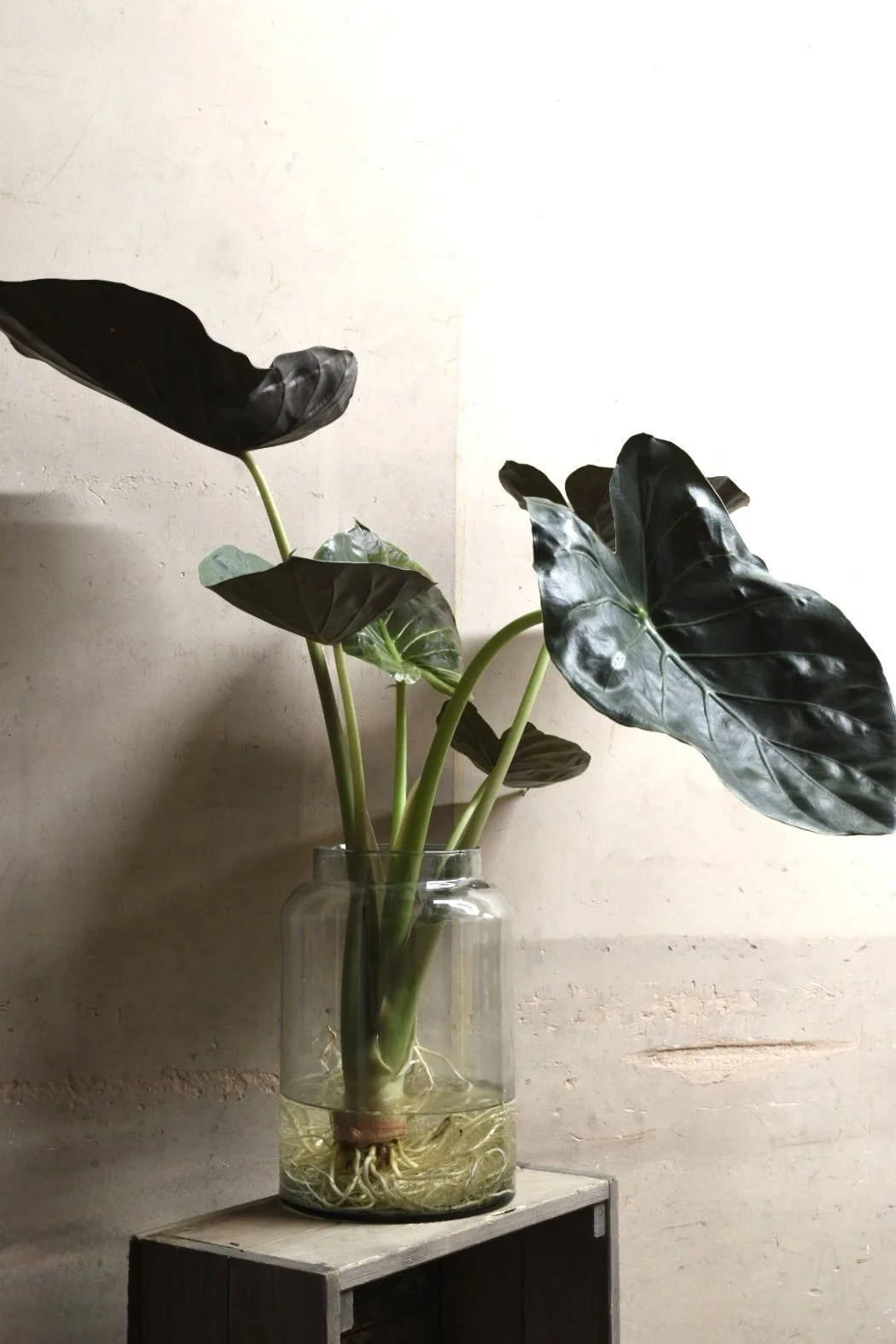
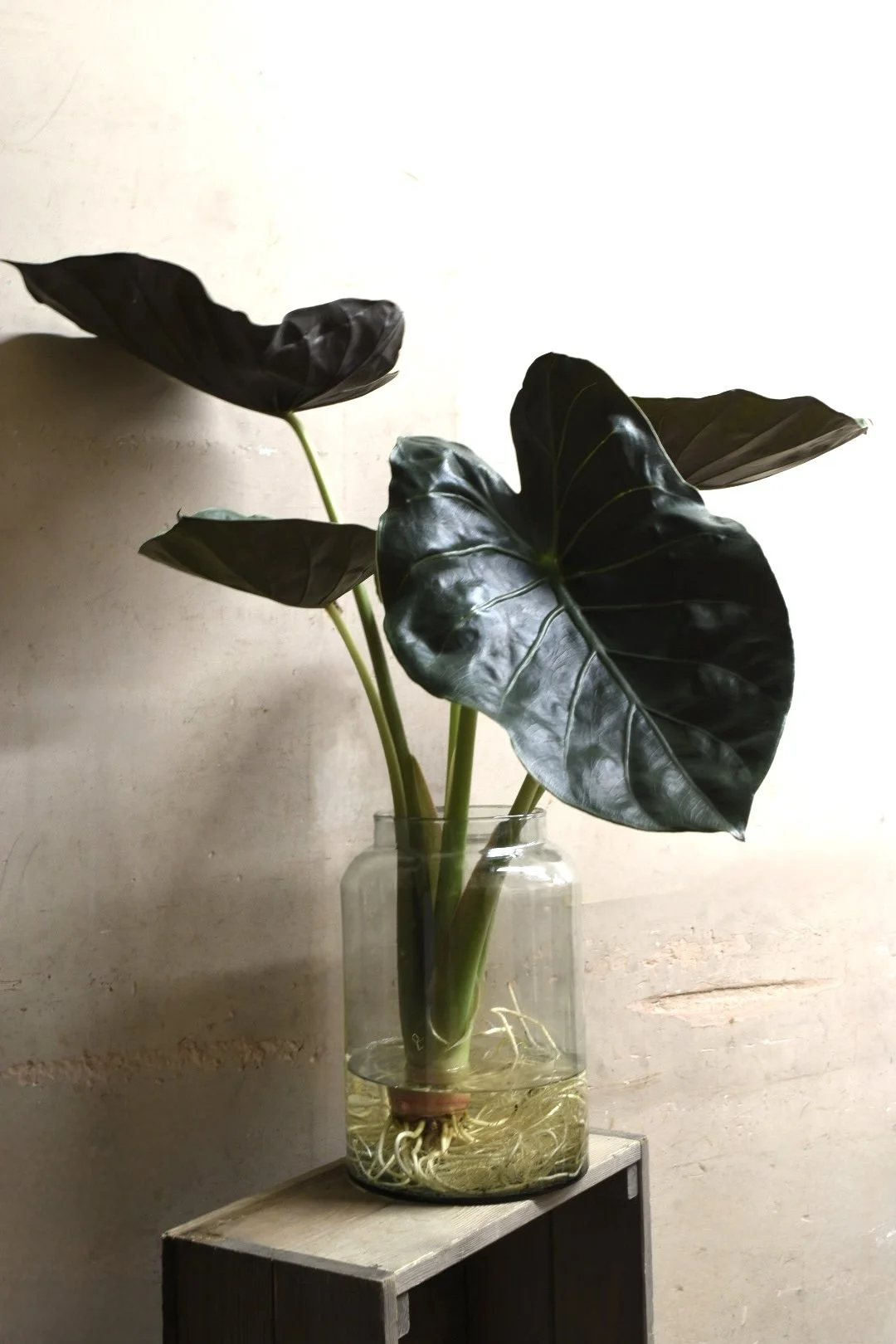
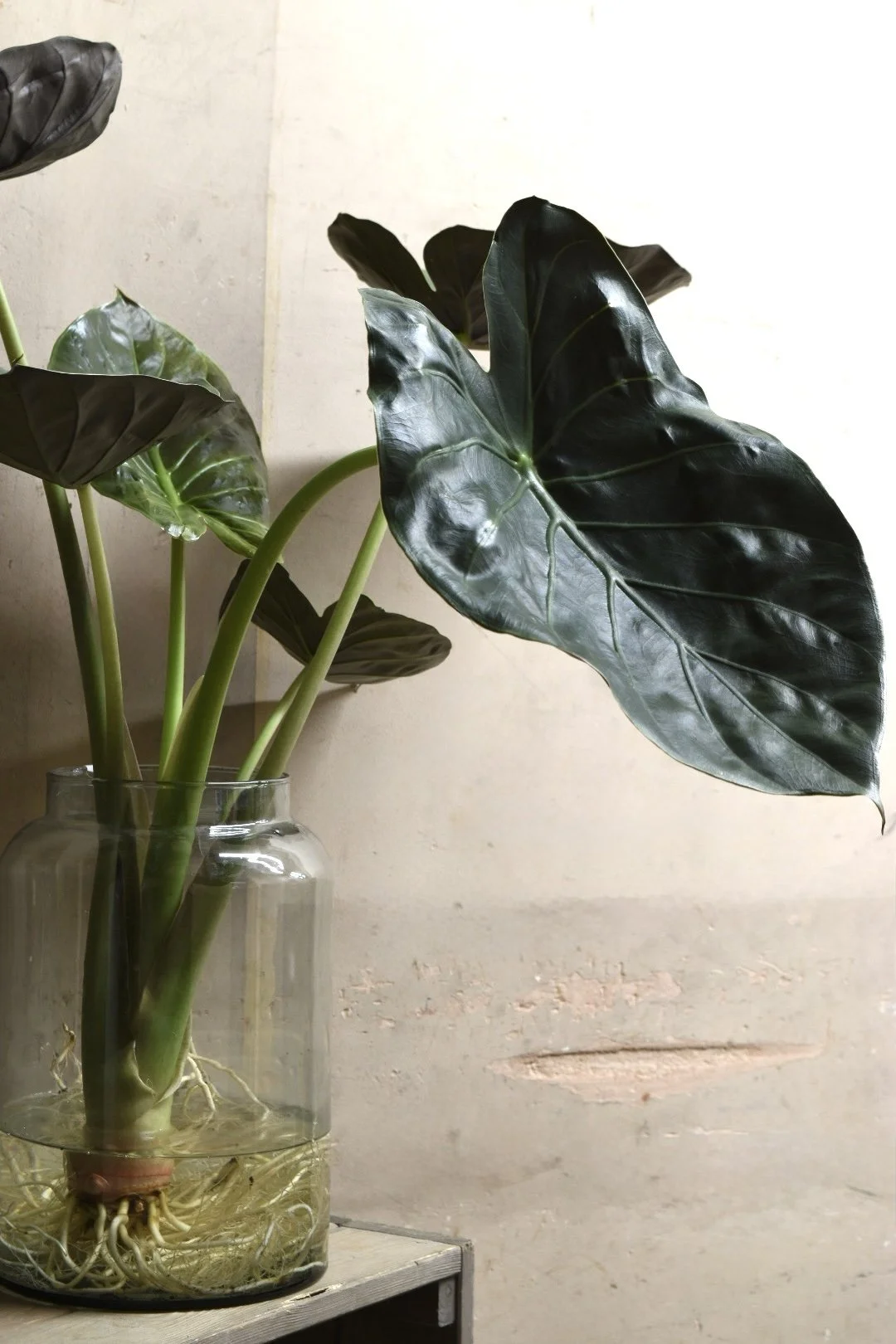
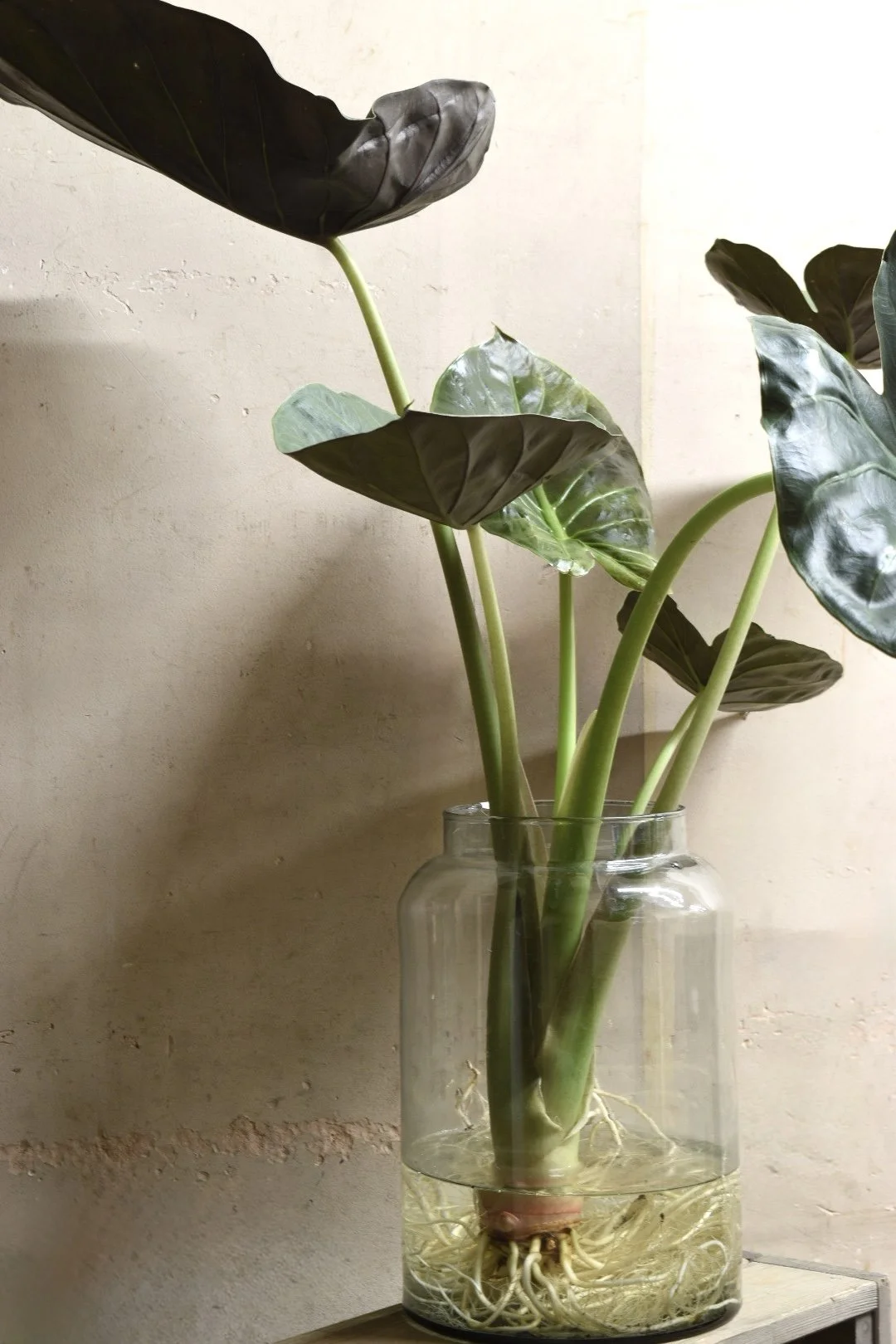
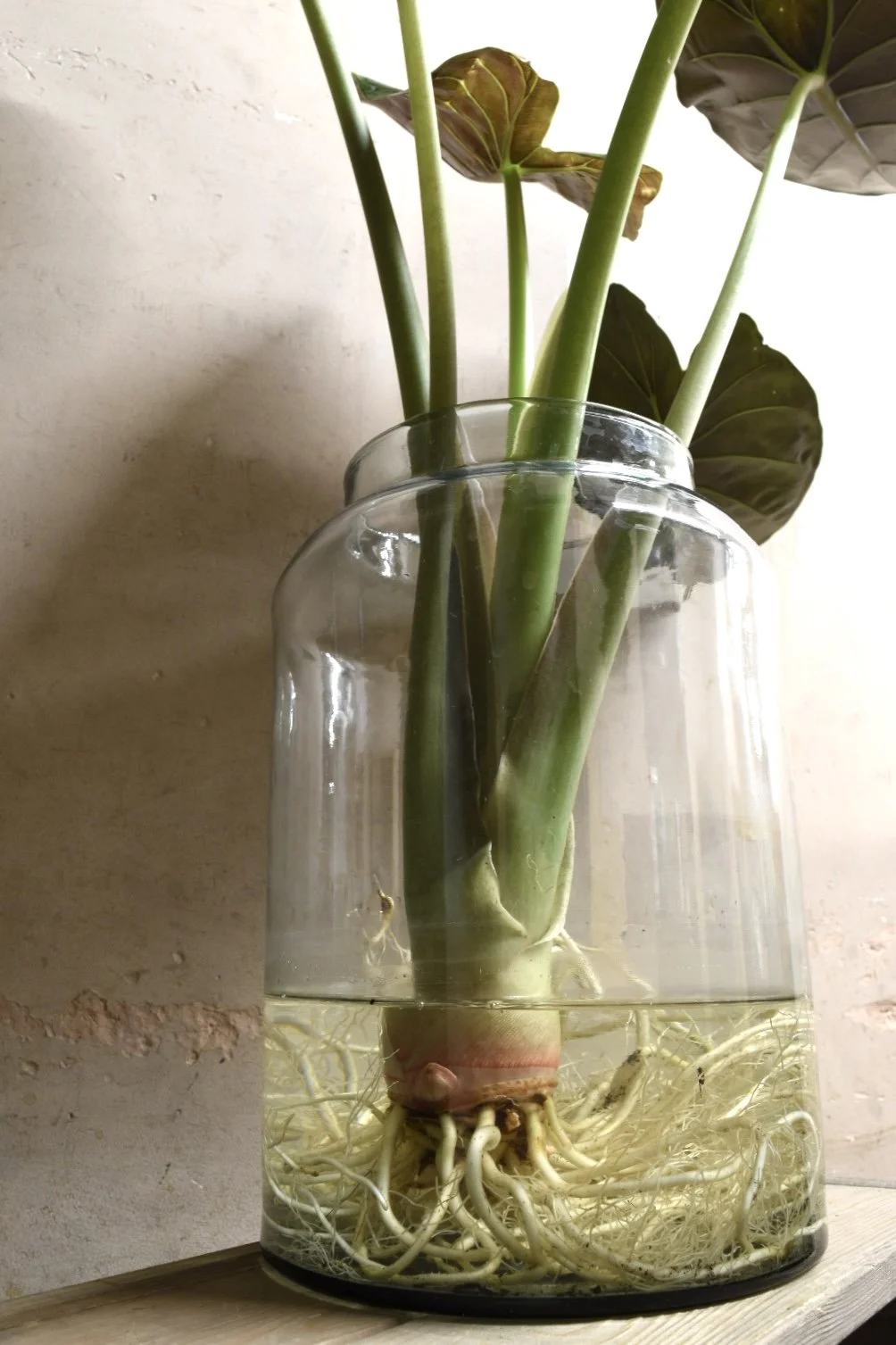
Hydroponic Alocasia
Hydroponic Alocasia are Alocasia species grown without soil, with roots supported in an inert medium (like clay pebbles or perlite) and nutrients supplied in a water-based solution. They retain the striking foliage—large, arrow- or heart-shaped leaves with prominent veins—while often showing faster, cleaner growth and reduced pest issues compared with potted counterparts.
Light
Bright, indirect light is best. Avoid direct midday sun which can scorch leaves. East- or north-facing windows with filtered light work well.
If light is low, growth will slow and leaves may yellow.
Temperature & Humidity
Keep temperatures between 65–80°F (18–27°C). Avoid drafts and sudden temperature drops below 60°F (15°C).
High humidity (60%+) is ideal. Use a humidifier, pebble tray, or group plants to raise humidity.
Water & Nutrients
Use a clean hydroponic system (deep water culture, ebb-and-flow, or airdome) with fresh, dechlorinated water.
Maintain water temperature around 65–72°F (18–22°C).
Keep pH between 5.8–6.5 for optimal nutrient uptake; check weekly.
Feed with a balanced hydroponic nutrient solution formulated for foliage plants. Follow manufacturer dosing; typically change nutrient solution every 1–2 weeks and top up between changes.
Monitor dissolved oxygen—use an air pump/air stone in reservoir-based systems to prevent root rot.
Roots & Media
Support roots with inert media (clay pebbles, perlite, rockwool) or net pots. Rinse media before use to remove dust.
Inspect roots periodically: healthy roots are white to light tan and firm; brown, slimy, or foul-smelling roots indicate rot—treat by trimming and renewing solution.
Airflow & Maintenance
Provide gentle air circulation to reduce stagnant humidity and pests but avoid strong drafts.
Clean reservoirs and system components on a regular schedule to prevent algae and bacterial buildup.
Pruning & Training
Remove yellow or damaged leaves at the base to encourage new growth.
Alocasias may go dormant or temporarily die back; reduce feeding and maintain warm, humid conditions to encourage recovery.
Pests & Problems
Watch for spider mites, aphids, mealybugs, and fungal issues. Treat pests with insecticidal soap, neem oil, or appropriate systemic controls safe