
Glass Bonsai Terrarium with Cork Lid
Glass Bonsai Terrarium with Cork Lid
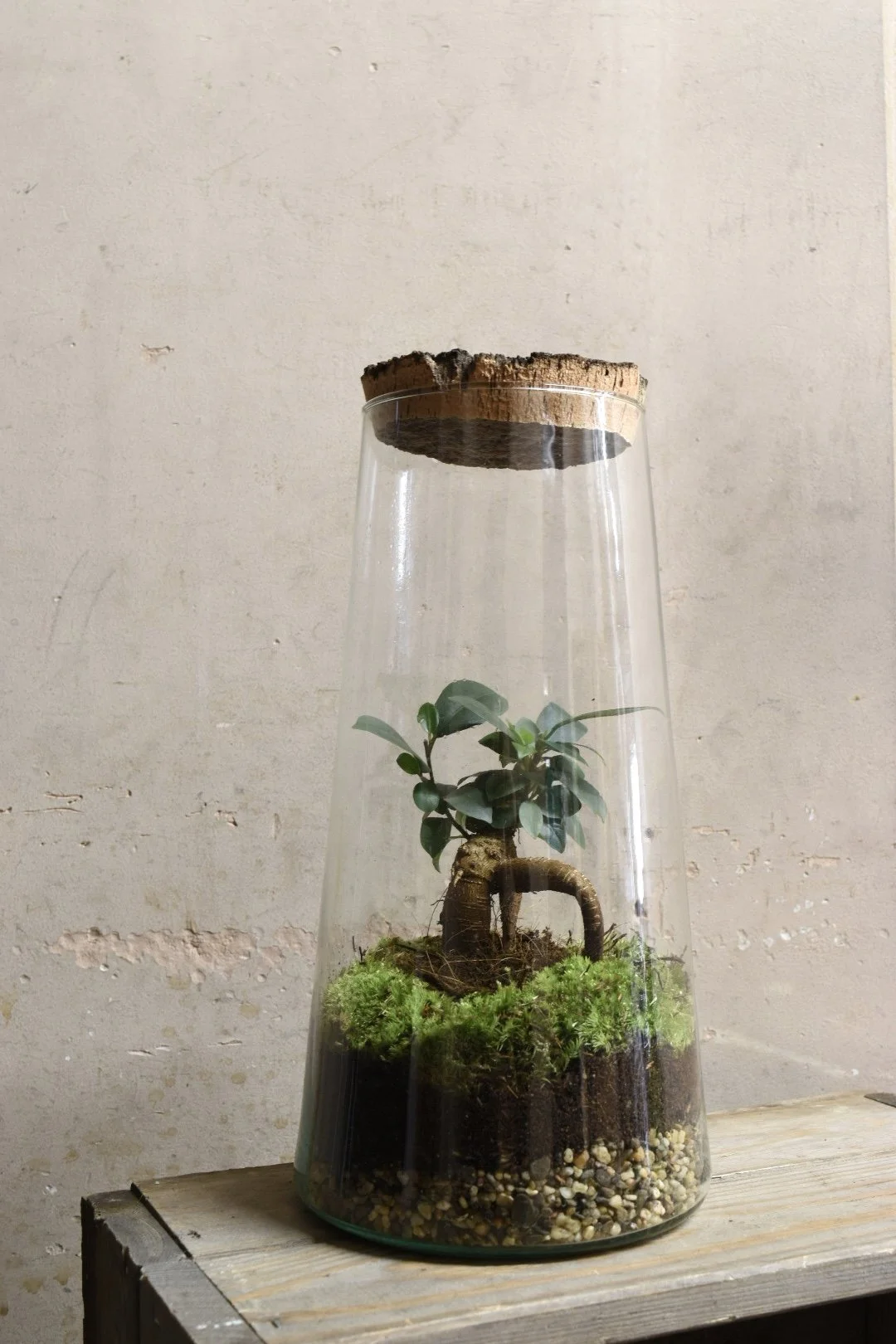
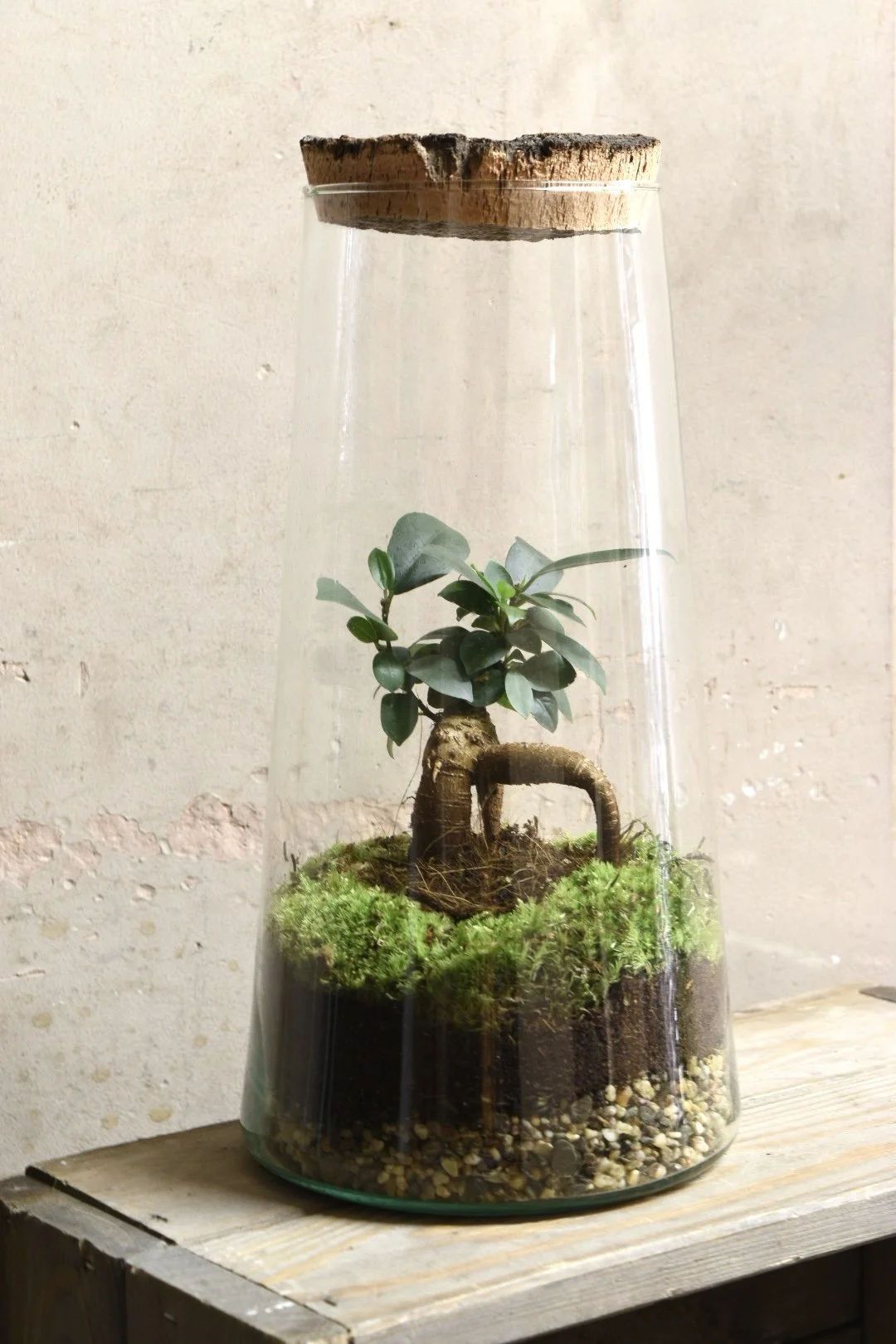
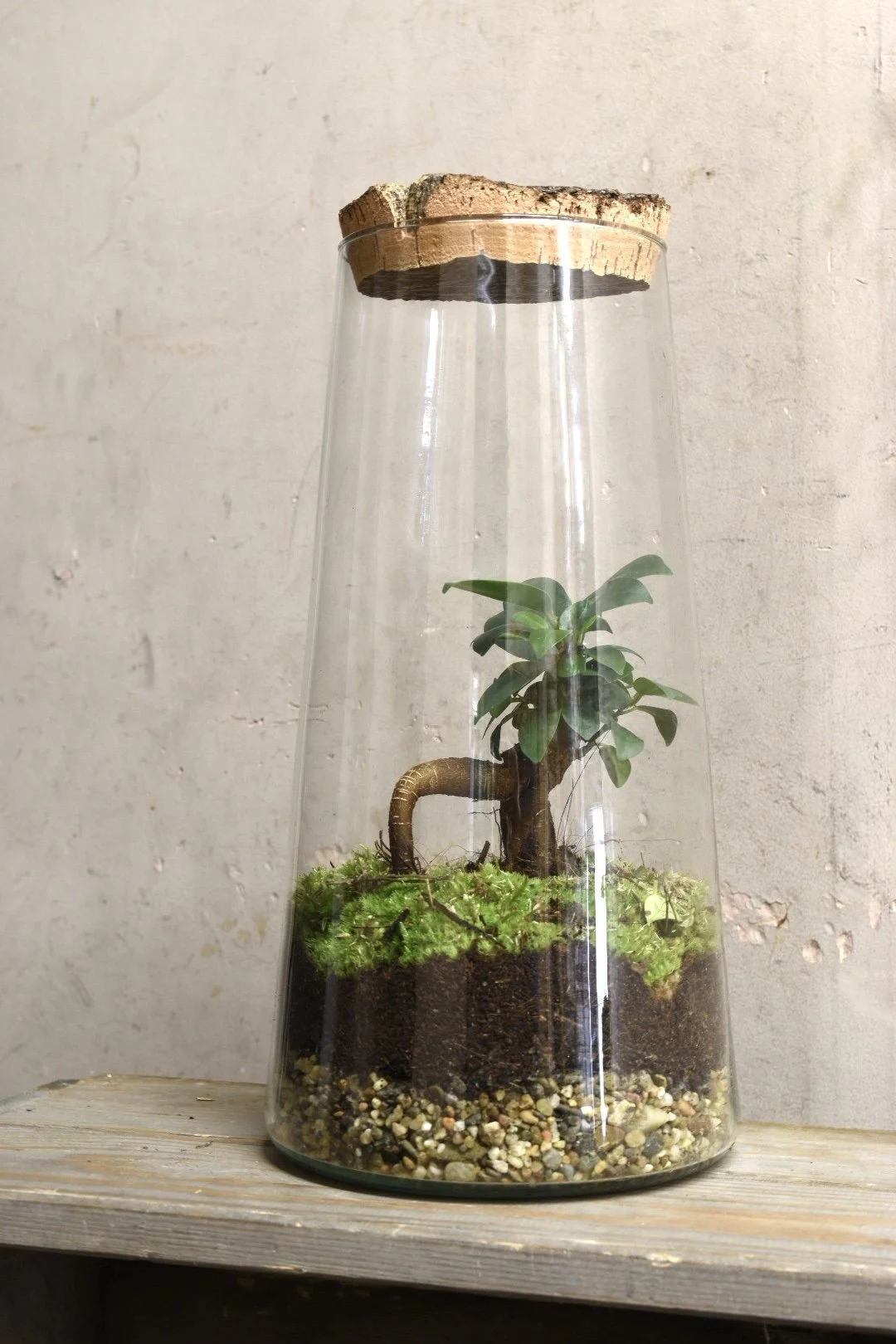
This Glass Bonsai Terrarium is a small, enclosed glass container designed to recreate the miniature landscape and aesthetic of a bonsai tree. It houses a carefully arranged mix of substrate, moss, small plants or a miniature tree, and decorative elements to form a self-contained, low-maintenance ecosystem. The clear glass allows 360-degree viewing while maintaining humidity and protecting the plants from drafts and rapid moisture loss. Ideal for tabletops, shelves, or windowsills, these terrariums bring a calm, sculptural green accent to indoor spaces with minimal care.
Light
Bright, indirect light is best. Place near an east- or north-facing window or a few feet back from a south- or west-facing window.
Avoid direct midday sun; it can overheat the glass and scorch foliage.
Watering
Water sparingly. Check soil moisture: water when the top 1–2 inches feel dry for open terraria, or when condensation is minimal for closed terraria.
Use a small watering can or syringe to avoid overwatering. Aim for even, light moisture; avoid puddles.
Closed terrariums need water far less often — typically every 4–8 weeks. Open terrariums may need watering every 1–2 weeks depending on conditions.
Humidity & Ventilation
Closed terrariums maintain humidity; open ones benefit from occasional misting.
For closed terrariums, open the lid for 10–20 minutes every 1–2 weeks to exchange air and prevent mold.
If condensation is heavy, open and leave ajar until it clears.
Soil & Drainage
Use a well-draining, airy mix: bonsai or cactus soil blended with a little compost and perlite works well.
Include a drainage layer: small pebbles or activated charcoal at the bottom to prevent waterlogging and odor.
Pruning & Shaping
Trim back new growth to maintain the bonsai form and prevent overcrowding.
Remove yellowing or dead leaves promptly to reduce rot and pests.
Temperature
Keep between 60–75°F (15–24°C). Avoid cold drafts and sudden temperature swings.
Protect from heaters that can dry out the environment.
Fertilizing
Feed lightly during the growing season (spring and summer): dilute a balanced liquid fertilizer to quarter-strength once a month.
Do not over-fertilize; terrariums concentrate nutrients and salts.
Pests & Disease
Inspect regularly for aphids, mealybugs, fungus gnats, or mold.
Isolate and treat affected plants; remove heavily infested material. Use insecticidal soap or a cotton swab with isopropyl alcohol for small infestations.
General Tips
Choose slow-growing, small-leaved plants suited for terrarium life (e.g., small ficus, baby tears, ferns, fittonia).
Keep design simple to limit maintenance and overcrowding.
Rotate the terrarium occasionally for even light exposure.