
Ficus Mi Gingseng Terrarium
Ficus Mi Gingseng Terrarium
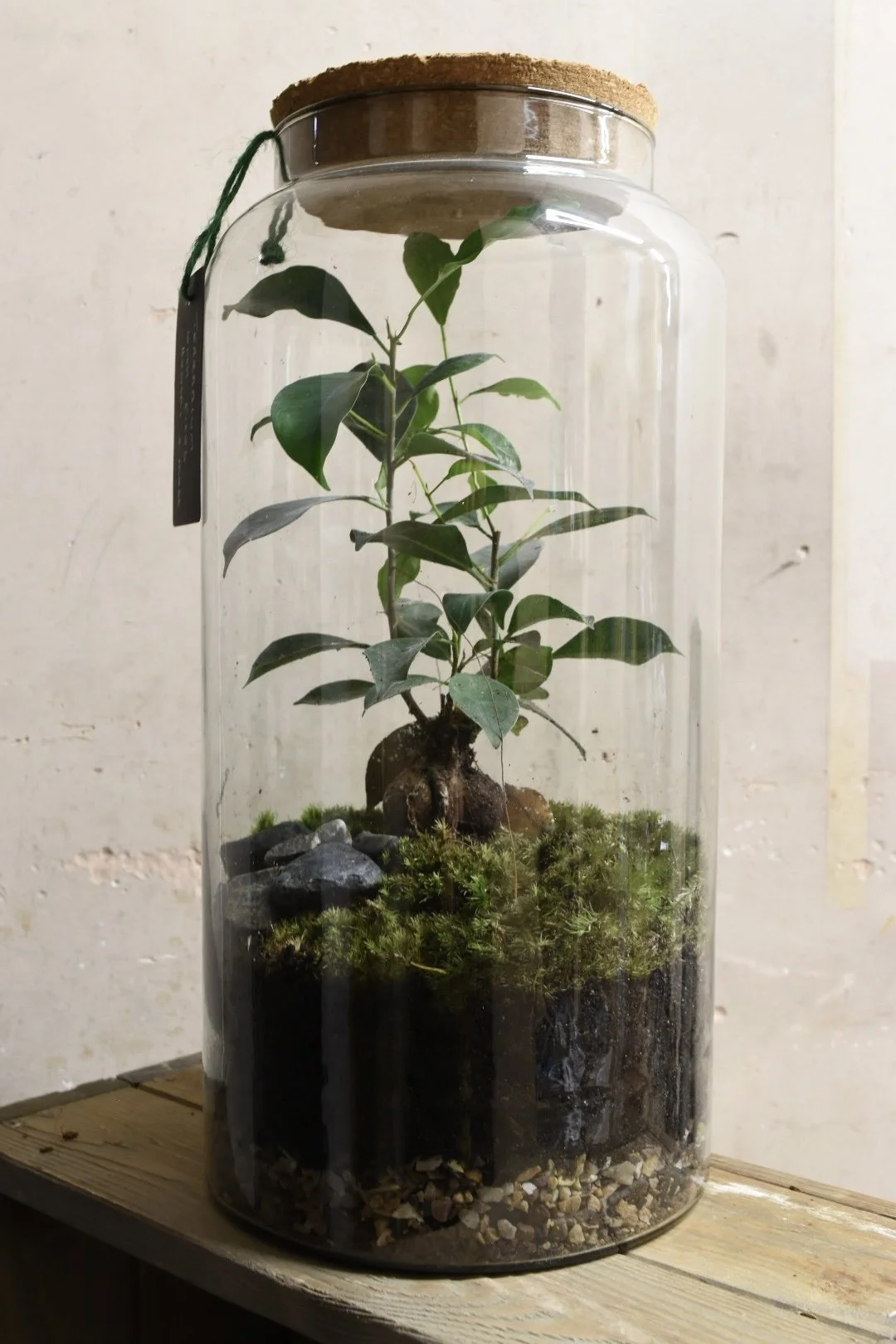
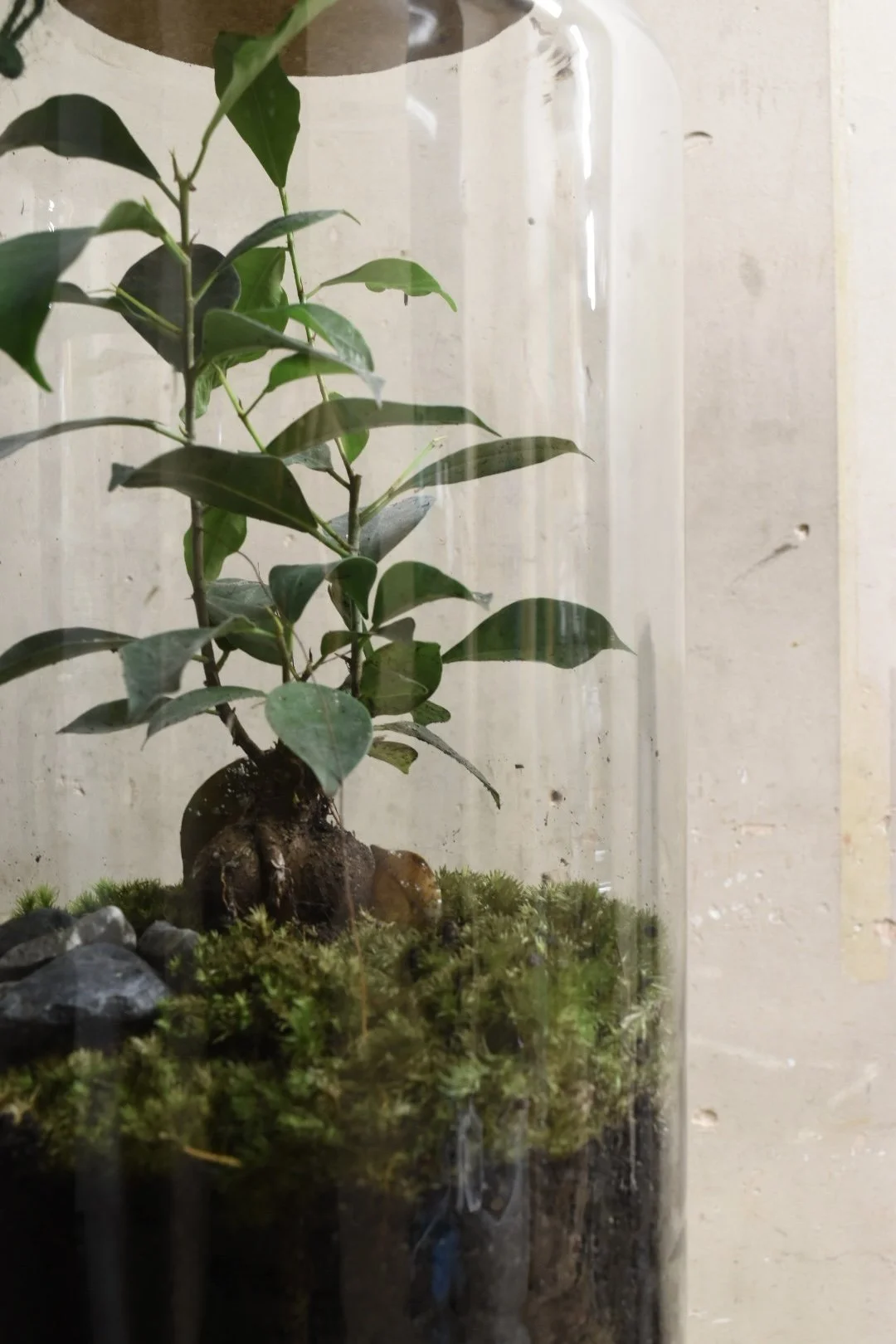
Ficus microcarpa Ginseng Terrarium: a compact, sculptural bonsai-style ficus with thick, bulbous above-ground roots and glossy, oval green leaves. Low-maintenance and slow-growing, it adds a striking, architectural focal point to desks, shelves, or tabletop gardens. Suitable for beginners with occasional pruning to maintain shape.
Light
Bright, indirect light is best. Place the terrarium where it gets strong but diffused light (near an east- or north-facing window, or a few feet back from a bright south/west window).
Avoid direct midday sun; glass can magnify light and burn leaves.
If natural light is limited, use a full-spectrum grow light on a 10–14 hour daily schedule.
Temperature
Keep temperature steady between 65–80°F (18–27°C).
Avoid cold drafts and temperatures below about 55°F (13°C).
Humidity
Ficus Ginseng likes moderate to high humidity. A terrarium naturally raises humidity, which is beneficial.
Aim for relative humidity around 50–70%. If condensation is heavy and constant, briefly open the terrarium to reduce humidity and improve air exchange.
If humidity is low, mist lightly or use a humidity tray outside the closed terrarium if space allows.
Watering
Water sparingly and carefully—terrariums reduce evaporation so overwatering is the main risk.
Check soil moisture by touch: top 1–2 inches should be lightly dry before watering. The root ball should be just slightly moist, not soggy.
Use room-temperature, low-salt water (rainwater or filtered if possible).
Water from the top sparingly or bottom-water by adding water to the terrarium base and allowing uptake; remove excess water if pooling occurs.
If you see yellowing leaves, root rot may be developing—reduce water and improve drainage/airflow.
Soil & Drainage
Use a well-draining potting mix: blend high-quality peat or coco coir with perlite and some pine bark. A bonsai or indoor tree mix works well.
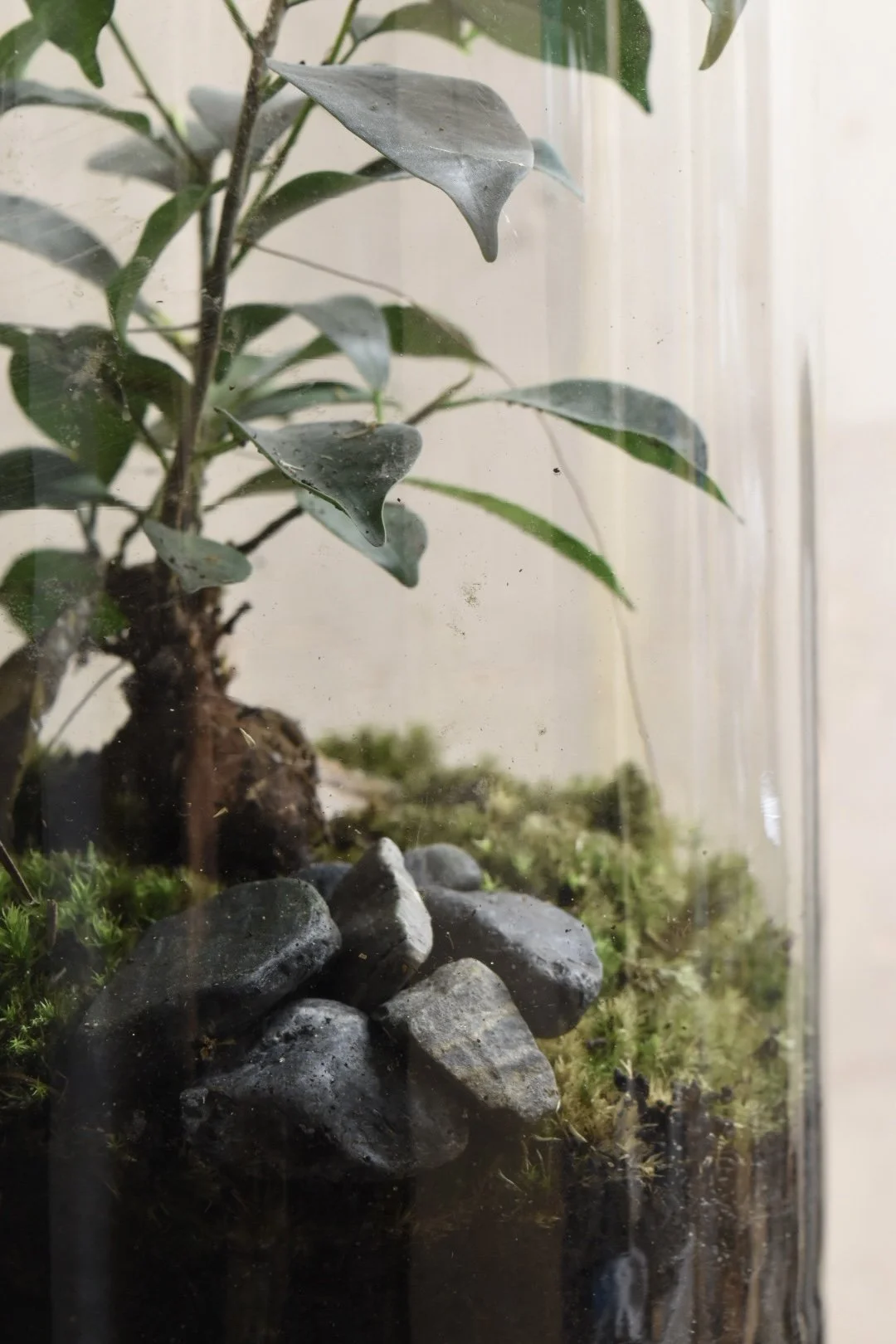
Provide a drainage layer in closed terrariums: 1–2 inches of LECA, pebbles, or coarse gravel plus a thin layer of activated charcoal to prevent stagnation and odors.
Keep the planting area slightly elevated above the water-collecting layer so roots aren’t sitting in water.
Airflow & Ventilation
Good airflow prevents fungal disease. For closed terrariums, open the lid or vents periodically (every few days for an hour or two) to exchange air.
If condensation builds up rapidly, increase ventilation frequency or slightly prop the lid to reduce humidity.
Pruning & Training
Prune to maintain size and shape—Ficus Ginseng responds well to light pruning.
Fertilizing
Fertilize sparingly during the growing season (spring and summer): use a balanced, water-soluble fertilizer at 1/4–1/2 recommended strength every 4–6 weeks.
Do not overfertilize in a terrarium—build-up can damage roots and alter soil salts.
Skip or reduce feeding in autumn and winter when growth slows.
Repotting & Maintenance
Repot or refresh the substrate every 2–3 years or if roots become pot-bound. When repotting, prune roots slightly and replace some of the soil mix.
Clean the terrarium glass periodically to ensure light penetration and check for algae or mold; wipe with a soft cloth and mild soapy water, rinse well.